
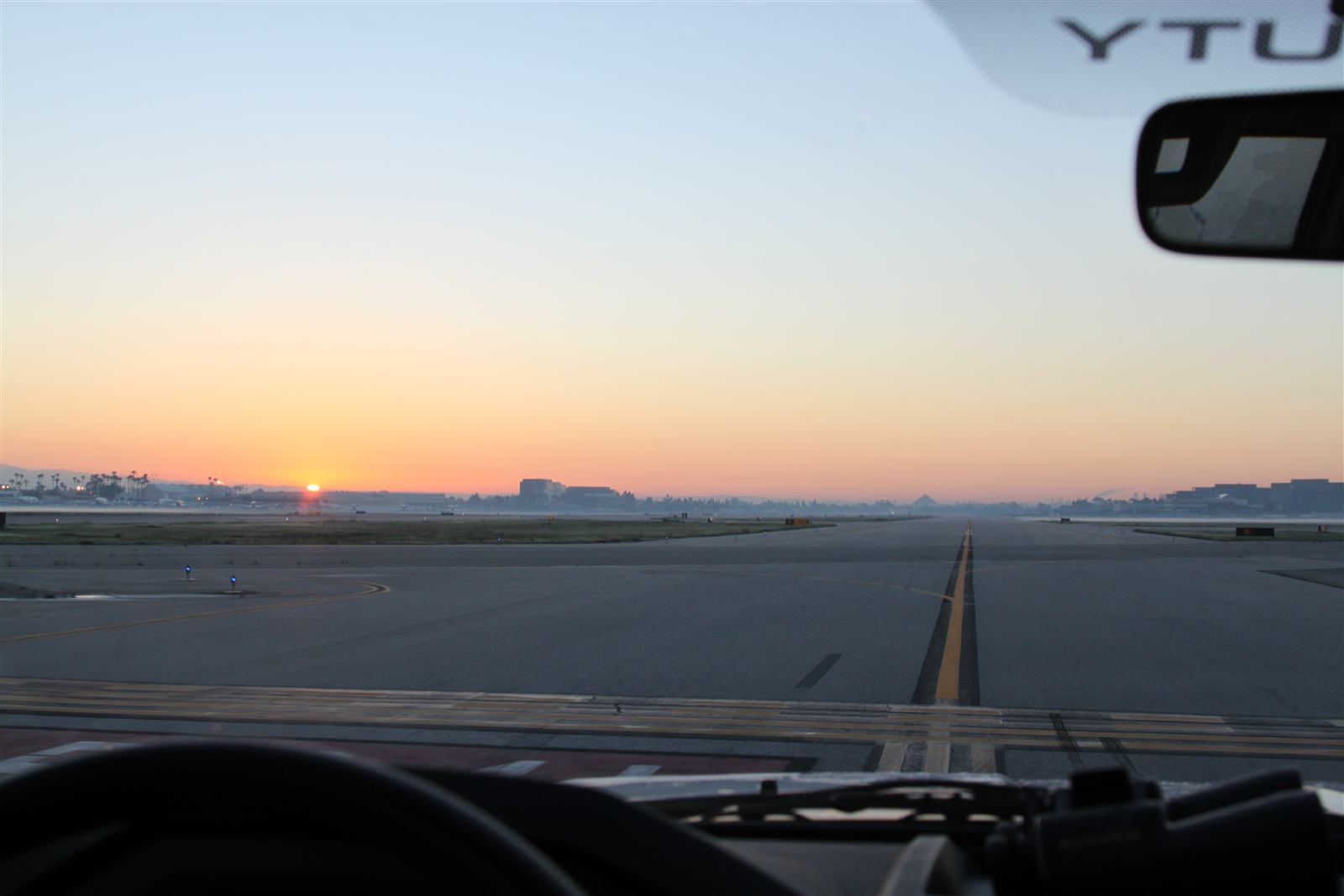
Most students treat the night rating as a formality on the way to a CPL (Commercial Pilot Licence), a box of hours to log rather than a genuinely different skill. Then they fly their first solo circuit after last light over Nairobi and discover the box was hiding a different aeroplane underneath it.
Kenya's own rules make the rating harder to earn honestly than most students expect, and the country you are earning it in changes what "night" even means. Neither of those facts gets much airtime in a syllabus built around ticking off hours.
The Short Version
- The Kenya Civil Aviation Authority (KCAA) night rating requires at least 5 hours of night flying, including 3 hours dual with at least 1 hour of night navigation, plus 5 take-offs and 5 landings as PIC (Pilot in Command) at night, valid for 12 months from issue.
- Kenyan law defines "night" narrowly: from 15 minutes after sunset to 15 minutes before sunrise at surface level, which near the equator is a shorter, faster transition than pilots trained at higher latitudes are used to.
- Industry reporting on Kenyan flight training has flagged that some schools complete the rating entirely in the circuit, without the night navigation the rules call for. Confirm your own school's syllabus covers real cross-country night navigation, not just repeated circuits.
- Night visual illusions, especially the black hole effect over unlit terrain, are a genuine hazard over Kenya's dark bush strips and escarpments, and the FAA's guidance is unambiguous: trust the instruments, not the eyes.
- Whatever your rating says on paper, the safest personal minimum for a VFR (Visual Flight Rules) only pilot in Kenya is simple: be on the ground before last light, not racing to beat it.
What the KCAA night rating actually requires
The Kenya Civil Aviation Authority sets out the night rating requirements in its Advisory Circular CAA-AC-PEL003, Pilot Ratings. A PPL (Private Pilot Licence) holder training for the rating must complete at least 5 hours of night flying, of which at least 3 hours must be dual instruction with a flying instructor, and at least 1 of those dual hours must be night navigation rather than circuit work.
On top of the dual time, the syllabus requires 5 take-offs and 5 landings flown solo as PIC at night. The rating itself is valid for 12 months from the date of initial issue or renewal, which means it lapses if you do not keep flying at night, quietly, in the background of ordinary currency.
That is a real syllabus, not a rubber stamp. The 1-hour night navigation requirement specifically exists because flying a lit circuit and navigating cross-country in the dark are different skills, and KCAA's own advisory circular treats them as separately examinable.
Advisory circulars get revised, so treat the figures above as the currently published requirement rather than a permanent fact. Confirm the exact hours with your KCAA-approved training organisation before you budget a training plan around them.
The catch that does not show up on the certificate
Here is the detail that changes how you should think about the rating before you book the hours. Industry reporting on Kenyan flight operations, most notably an article published by the aviation training site Disciples of Flight, describes Kenya as not permitting a PPL or CPL holder to fly at night unless both the pilot and the aircraft also hold an instrument rating.
That is a significant claim, and it did not come from a KCAA publication I could independently confirm the exact current wording of, so treat it as a strong lead rather than settled fact. Before you plan a training budget around it, ask your KCAA-approved training organisation directly whether your night rating, on its own, currently permits you to act as PIC on a VFR night flight, or whether an instrument rating is genuinely required to use it.
The reasoning behind a rule like this is not hard to understand even without the exact citation. General aviation aerodromes across Kenya are unevenly lit, and radar coverage does not extend uniformly across the country's airspace, leaving a VFR pilot who loses visual reference at night over unlit terrain with very little to fall back on.
If the restriction is current, it explains something that otherwise looks strange. A rating that a school will happily sell you the hours for may not, by itself, let you fly at night the way a night-rated pilot in many other countries can.
Why "night" starts and ends faster here than it did in your training videos
Kenya's Civil Aviation (Operation of Aircraft-General Aviation Aeroplanes) Regulations, 2018 define night with a precise legal test rather than a clock time: the period from 15 minutes after sunset to 15 minutes before sunrise, both measured at surface level, and also any period when an unlit aircraft or prominent object cannot be clearly seen at a distance of 4,572 metres. That definition is worth actually reading rather than assuming from memory.
What most students trained on material written for temperate latitudes do not appreciate is how fast that 15-minute window actually passes near the equator. According to EarthSky's explanation of the three stages of twilight, civil twilight near the equator lasts only around 21 minutes near the equinox, compared with roughly 28 minutes at 40 degrees latitude and over 40 minutes further towards the poles, because the sun sets almost perpendicular to the horizon here instead of at a shallow angle.
The practical effect is that a Kenyan sunset does not fade gently the way it does in a British or North American training video. It goes from full daylight to genuine night in well under half an hour, which compresses your entire margin for a delayed arrival into a window shorter than the time it takes to complete a normal circuit and full-stop landing.
The illusions that wait over unlit terrain
Night visual illusions are not an abstract human-factors topic in a country with as much genuinely dark, featureless ground as Kenya has outside its cities. The FAA's Spatial Disorientation safety brochure describes the black hole effect, also called the featureless terrain illusion, in terms that map directly onto flying towards an unlit bush strip or across the Rift Valley after dark: with no ground lighting for reference, the runway lights appear to float in space, and the natural but dangerous tendency is to lower the nose to chase them, flying a dangerously low approach without realising it.
The FAA's own accident data backs the seriousness of this. AOPA's Pilot Protection Services reports FAA statistics showing that night accidents occur at close to twice the rate of daytime accidents, and AOPA's own accident-analysis programme, the Nall and now McSpadden Report series, has repeatedly found that accidents occurring at night, particularly those that stray into instrument conditions, carry a disproportionately high fatality rate compared with day VFR accidents.
The guidance that follows from that data is consistent and simple: trust the instruments, not the eyes. A visual illusion feels completely convincing from inside the cockpit, which is exactly why the fix cannot be "look harder", it has to be a deliberate discipline of cross-checking the attitude indicator and altimeter against what your eyes are telling you.
Away from Nairobi's glow, a moonless night over the Mara, the highlands, or the coast strip gives you almost none of the ambient light a city pilot leans on without noticing. That is precisely the black hole scenario the FAA brochure describes, not a rare edge case but the default condition over most of rural Kenya after dark.
Wilson after last light is a different aerodrome
Even at Wilson, the country's busiest general aviation aerodrome, night is treated as an operationally distinct condition rather than an extension of the day. Wilson's published aviation charges define night hours separately from day hours and apply a premium landing fee for aircraft operating within that window, a small but telling signal that the aerodrome itself does not treat after-dark operations as routine.
Most Kenyan flying schools structure their entire training day around dawn and pre-dusk slots for exactly this reason, chasing the smoother early air and avoiding the compressed, fast-changing light of the evening. If your own school rarely schedules flights near last light, that is not overcaution, it reflects how narrow and unforgiving that window actually is here.
What this means for your personal minimums
None of this is an argument against earning the rating. A genuinely taught night rating, with real night navigation and not just repeated circuits, is a valuable skill and KCAA built the hour requirements to reflect that.
It is an argument against treating the certificate as permission to cut your margins close. The single most protective personal minimum a VFR-only Kenyan pilot can adopt is deciding, before you ever start the engine, that you will be on the ground with the aircraft shut down before last light, not merely airborne before it.
That means building your cross-country planning backwards from sunset with a real buffer, not the bare 15-minute legal margin the regulation allows. A short local delay, a longer-than-expected taxi queue, or a diversion around weather can eat that 15 minutes before you have noticed it is gone, and near the equator you will not get the slow, forgiving fade of a temperate dusk to buy back the time.
What the training pattern actually looks like
Industry reporting on how Kenyan schools deliver the night rating raises a specific concern worth asking about directly rather than assuming does not apply to you. The claim, again from reporting rather than a KCAA source I could verify word for word, is that some schools complete the entire rating in the circuit, with little or no genuine night cross-country navigation, even though the advisory circular calls for at least 1 hour of night navigation among the dual time.
Whether or not that pattern is widespread today, it is a reasonable question to put to any KCAA-approved training organisation before you book the hours: ask specifically whether your night navigation hour will take you genuinely away from the aerodrome environment, tracking a route in the dark, rather than repeating the same lit circuit five times with a different label on the lesson plan. A rating earned entirely in a lit circuit teaches you very little about the actual hazard, which is navigating and judging distance over unlit ground, not landing on a runway you can already see.
The Short Version, revisited
A night rating in Kenya is real training with real hour requirements, not a formality, and the equatorial twilight window and the terrain you will fly over after dark make the human-factors stakes higher here than the syllabus alone suggests. Confirm the current instrument-rating question with KCAA and your school before you plan around it, insist on genuine night navigation rather than repeated circuits, and treat "before last light" as your real deadline instead of the legal minute count.
AngaBrief's risk assessment wizard flags a flight's planned arrival time against last light as part of the enVironment section of PAVE, so a tight margin shows up as a named factor rather than an assumption nobody checked. The tool only records the assessment; the go/no-go decision always rests with the pilot in command and their instructor.
Key Takeaways
- KCAA's night rating needs 5 hours of night flying, 3 dual including 1 hour of night navigation, and 5 solo take-offs and landings as PIC, valid 12 months.
- Kenyan law defines night as 15 minutes after sunset to 15 minutes before sunrise, a window that closes faster near the equator than at higher latitudes.
- Confirm directly with KCAA and your school whether a night rating alone permits VFR night PIC flight, or whether current rules also require an instrument rating.
- The black hole effect over unlit Kenyan terrain is a genuine hazard: trust the instruments, not what the eyes report.
- Plan to be on the ground before last light, not merely airborne before it, and insist your night rating included real night navigation, not just circuits.