
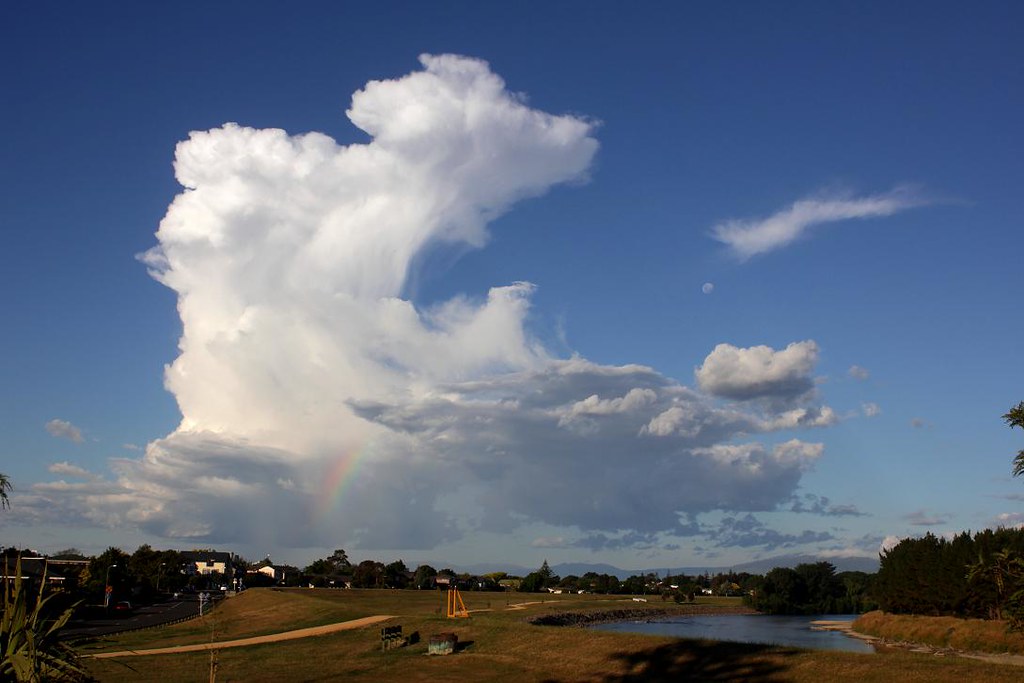
Most Kenyan students fly the Nairobi to Kisumu route as a routine cross-country, the kind of leg you log without much of a second thought once Wilson and the Rift Valley escarpment are behind you.
That habit is worth breaking. Kisumu sits on a different body of water and a different weather machine than anything you trained around at Wilson, and the last two years of Kenyan aviation reporting show exactly what that difference can do to a flight.
The Short Version
- Kisumu International (HKKI) sits at roughly 3,796 feet elevation on the shore of the Winam Gulf, the eastern arm of Lake Victoria.
- A large tropical lake drives its own local weather. Expect building convection through the day, not the steady pattern you learned at Wilson.
- Lake Victoria is a major bird feeding area, and it sits directly on the approach and departure paths into Kisumu.
- A documented 30 May 2024 incident saw a Kenya Airways aircraft fly two missed approaches in strong wind before taking a bird strike on the third attempt.
- A separate April 2026 incident saw a Kisumu-bound flight turn back to Nairobi after heavy rain and severe turbulence near the lake.
- Brief this route as its own environment, not as a longer version of a Wilson local flight.
A lake changes the weather machine, not just the scenery
Wilson sits in the highlands at over 5,500 feet, where the daily weather rhythm is driven by highland heating and afternoon cumulus building over high ground. Kisumu sits far lower, on the shore of one of the largest freshwater lakes on Earth, and that geography runs a different weather engine entirely.
Large tropical lakes are well known drivers of local convection. Daytime heating over the surrounding land contrasts with the comparatively stable lake surface, and that temperature contrast helps organise cloud and shower activity around the lake basin through the day.
The practical result for a student flying this route is simple. Do not assume the calm, settled morning departure weather you briefed at Wilson tells you anything about the conditions you will find approaching Kisumu three or four hours later, and do not assume Kisumu's own morning calm will hold into the afternoon.
What actually happened on this route, twice, recently
Talking about "weather risk" in the abstract is easy to wave off. Two specific, independently reported incidents on this exact route in the last two years make it concrete.
On 30 May 2024, a Kenya Airways Boeing 737-800 operating flight KQ670 from Nairobi flew two missed approaches into Kisumu because of strong wind. On the third approach the aircraft took a bird strike, and damage to the steering gear meant the crew could not immediately vacate the active runway after landing, as confirmed in local reporting from Eastleigh Voice.
That single flight packs both hazards this article is about into one approach: wind strong enough to force two go-arounds, then a bird in the flight path on the third attempt.
In April 2026, a separate Kisumu-bound flight carrying more than seventy passengers was hit by heavy rain and strong winds descending toward the airport. Kenya Airways' own account, reported by Viral Tea Ke, describes the aircraft encountering severe turbulence near Lake Victoria before the crew abandoned the approach and returned to Nairobi.
Kenya Airways has also flagged renewed bird strike concern at Kisumu again in 2026, according to local aviation press. Read individually these look like unrelated news items. Read together on the same short list of Kisumu approaches, they describe a consistent operating environment, not a run of bad luck.
Why the lake is a bird problem, not just a weather problem
Lake Victoria is a major feeding area for birds, and that puts wildlife activity directly across the approach and departure corridors serving Kisumu. This is the same underlying physics as the bird strike risk covered in our article on Wilson's boundary with Nairobi National Park, applied to a different terrain type.
At Wilson the attractant is a wildlife park full of soaring raptors. At Kisumu it is open water and shoreline habitat full of waterbirds, and the KQ670 incident shows the risk is not hypothetical on this specific route.
The same discipline applies in both places. Fly your circuit and approach altitudes with an active visual scan for birds, treat any confirmed strike as a maintenance and safety reporting item rather than something to shrug off, and do not assume a clear METAR means a clear approach path.
The lake was an airport before Kisumu had a runway
There is a reason Kisumu became an aviation waypoint at all, and it predates the runway you will land on. In the 1930s, Imperial Airways ran Short Empire flying boats on the Southampton to Cape Town route, and Lake Victoria at Kisumu, then still called Port Florence, was one of the scheduled stops.
Passengers and airmail transferred at Kisumu between the flying boat service and the onward land-based legs toward Nairobi and points south, and photographic archives of the original flying-boat runway from that era still exist today. The lake was chosen for the same reason it still shapes your flight now: it is a large, reliable body of open water in a region that otherwise offered a flying boat operator very little.
None of that history changes how you plan a modern flight into HKKI. It is worth knowing anyway, because it is a reminder that this stretch of water has been an operational factor in East African aviation for close to a century, not a new variable someone invented for this article.
Planning the leg properly
Kisumu's runway, 06/24, runs about 2,040 metres of asphalt, generous for anything in the C152 to PA-28 class, so runway length is not where this route bites you. The weather and wildlife picture is where it bites you, and both are manageable with the right planning habits.
- Time your arrival deliberately. A morning departure from Wilson that puts you into Kisumu before the daily convective build strengthens is a better plan than a midday departure that arrives into peak afternoon activity.
- Brief a genuine alternate. The April 2026 incident ended safely because the crew had Nairobi to return to. A student on a solo cross-country needs the same honesty about where they divert to if Kisumu goes bad on arrival.
- Treat the approach as an active bird-scan phase, the same way you would over open savanna, not a routine descent to a benign runway.
- Check current weather close to departure, not just at flight-planning time the night before. Lake-driven convection can build faster than the highland pattern you are used to reading.
Here is the opinion part. Kenyan flight schools brief bush strip operations and coastal flying as their own distinct environments, and rightly so, but the Nairobi-Kisumu run tends to get treated as a routine repositioning leg because the runway is long and the airport is a real international field.
The incident record over the last two years says that framing is backwards. A long runway and international status say nothing about the wind and the wildlife you will meet on the approach, and this route deserves the same dedicated pre-flight briefing as any other named environment in this series.
The Environment factor in a PAVE assessment exists precisely to force this kind of route-specific thinking before you accept the flight. A generic "weather looks fine, runway is long enough" note does not capture what actually threatens this particular leg, and an assessment that stops there has not really done its job.
Write down the lake-driven convection risk and the shoreline bird activity as named items for this specific route, the same way you would name escarpment turbulence for a Rift Valley crossing or salt haze for a coastal leg.
What pilots say about this route
Ask around a Wilson flying school about the Kisumu leg and the story is fairly consistent. Pilots describe an uneventful, almost boring outbound leg followed by an arrival that suddenly demands full attention once the lake comes into view.
The common thread in those accounts is surprise, not incompetence. Pilots who fly the route regularly learn to expect the shift; pilots flying it for the first time on a training cross-country often do not, because nothing in their Wilson-based syllabus prepared them for a large lake actively generating its own weather and its own bird traffic.
Frequently asked questions
Is Kisumu a KCAA-licensed aerodrome?
Yes. Kisumu International Airport (HKKI) is one of Kenya's licensed international aerodromes, alongside fields such as Wilson, JKIA, and Mombasa.
Do I need special training before flying to Kisumu?
There is no separate rating required. What matters is briefing the route properly: lake-driven convective weather, bird activity around the shoreline, and a genuine alternate, the same way you would brief a coastal or bush strip flight as its own environment.
Is the bird strike risk at Kisumu worse than at Wilson?
The article does not claim that, and the comparison has not been rigorously studied. What is documented is that Lake Victoria's shoreline is a known bird feeding area directly on Kisumu's approach paths, which is a distinct hazard from Wilson's national-park boundary, not a lesser or greater one.
What should I do if the weather closes in on approach to Kisumu?
Go around early, do not press a marginal approach, and use the alternate you briefed before departure. The April 2026 incident ended without harm precisely because the crew treated a deteriorating approach as a reason to turn back rather than continue.
Does Kisumu's elevation affect aircraft performance the way Nanyuki's does?
Not in the same way. Kisumu sits at roughly 3,796 feet, well below the highland fields where density altitude becomes the dominant performance concern, so a C172 or PA-28 will not see the dramatic takeoff distance penalty covered in our piece on the Kenya highlands. The performance story here is about wind and go-around discipline, not density altitude margins.
Key Takeaways
- Kisumu's lakeside position drives a different weather pattern than Wilson's highland pattern. Brief it as its own environment.
- Lake Victoria is a genuine bird feeding area sitting on Kisumu's approach and departure paths, documented by a real 2024 strike incident.
- Two independently reported incidents in the last two years, a bird strike and a weather turnback, show this route carries real operational risk, not theoretical risk.
- Time your arrival to beat the daily convective build, brief a genuine alternate, and treat the approach as an active bird-scan phase.