
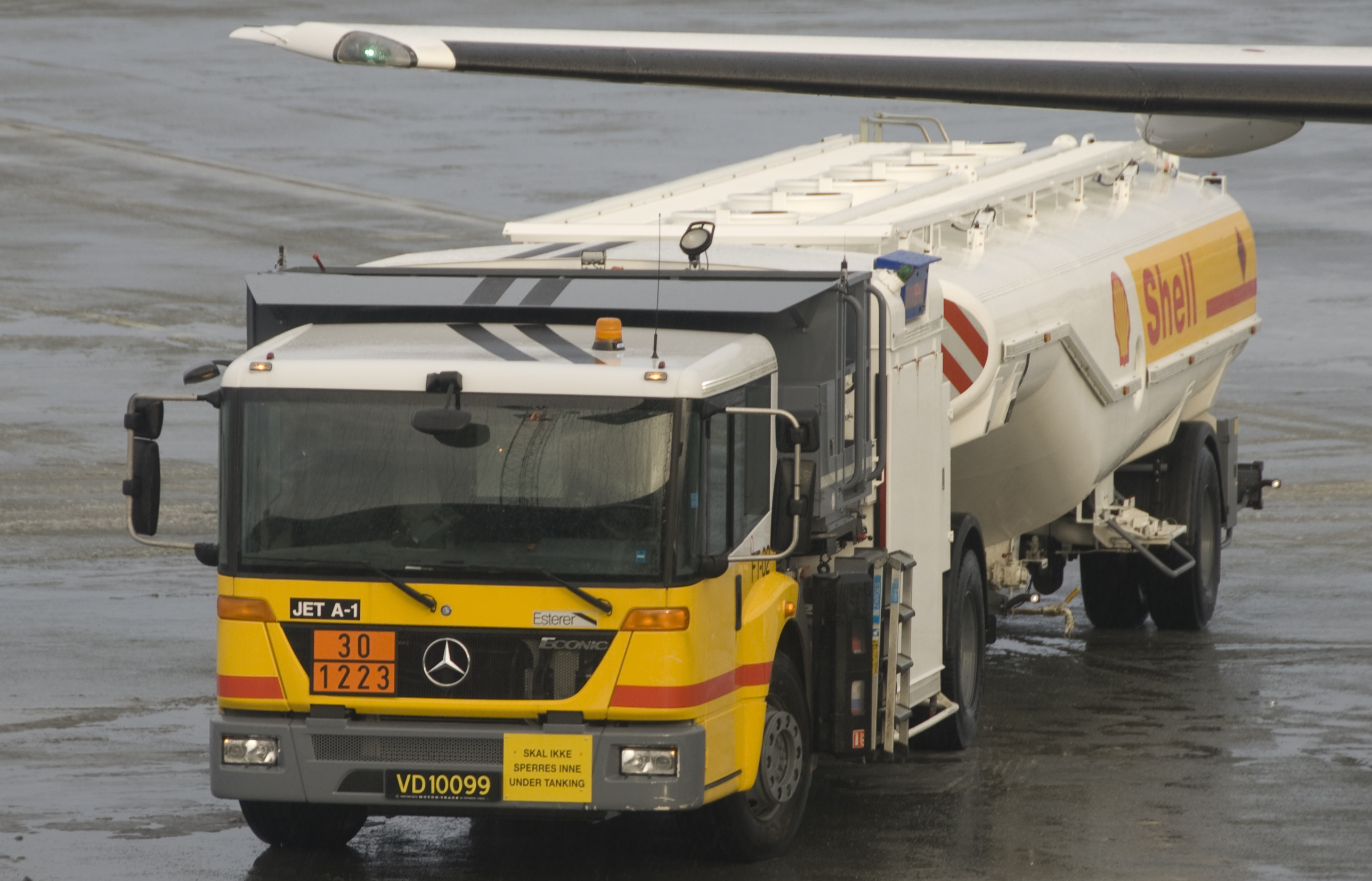
Fuel exhaustion (the engine stopping because there is no fuel, not because of a mechanical failure) is one of aviation's most preventable accidents. It is also one of its most consistently recurring ones. In Kenya, the risk is elevated by the sparse and sometimes unreliable avgas supply network at aerodromes outside Nairobi and Mombasa. A student pilot planning their first cross-country to Eldoret or Kisumu who does not verify fuel availability at each stop is not being negligent in an obvious way: they are being negligent in a way that looks like normal planning until it becomes a fuel emergency at 2,000 ft over the Rift Valley.
What avgas is available where
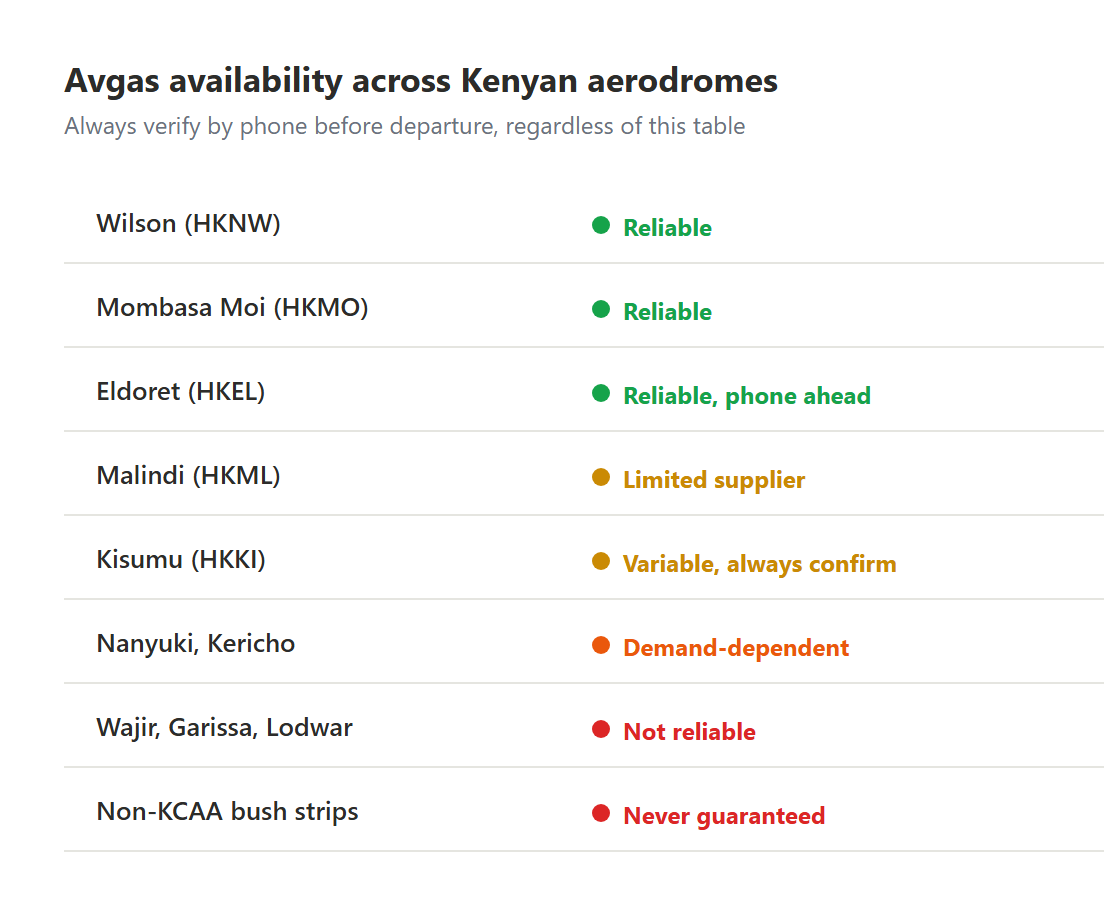
100LL avgas is widely available at the major KCAA-licensed aerodromes. The reliable sources:
- Wilson (HKNW): Multiple fuel suppliers, consistent availability. If you cannot get fuel at Wilson you have a very unusual problem.
- JKIA (HKJK): Available for GA aircraft but requires coordination with handling agents. Not the recommended fuel stop for a student C172.
- Mombasa Moi (HKMO): Reliable supply. Advance notice recommended for large quantities.
- Kisumu (HKKI): Available but supply consistency has historically varied. Always phone ahead.
- Eldoret (HKEL): Available. Phone ahead for weekend and evening availability.
- Malindi (HKML): Available. Limited supplier: confirm quantity before planning a full uplift.
For other KCAA aerodromes (Wajir, Garissa, Lodwar, Nanyuki, Kericho), fuel supply is significantly less reliable. Wajir and Lodwar have had extended periods of non-availability. Garissa's supply depends on the local fuel supplier's logistics from Nairobi. Nanyuki's availability depends on demand from the various operators based there.
For non-KCAA bush strips, fuel availability is essentially never guaranteed unless you have arranged it in advance and confirmed it within 24 hours of your arrival.
The planning rule: verify, not assume
The correct planning approach for any cross-country with a fuel stop outside Nairobi is to phone the destination aerodrome and verify fuel availability before you depart. Not to check a database, not to assume it was available when you last flew there six months ago, and not to "check when you get there." Phone, speak to a human, and confirm:
- Is 100LL avgas available right now?
- What quantity is available? (If you need 100 litres and they have 30, that is a problem.)
- Is the fuel available at the time you plan to arrive? (Some aerodromes have restricted fuel hours.)
- What is the payment method? Cash? MPESA? Card? Some bush operators do not accept card.
Document the name of the person you spoke to and the time of the call. This is part of your pre-flight planning record.
Calculating fuel required with Kenya-specific margins
The KCAA minimum VFR fuel requirement is sufficient for the planned route plus 30 minutes reserve at normal cruise. This is a regulatory minimum, not a planning target. For cross-country flights in Kenya, the prudent planning figure is:
- Fuel for the planned route (calculated at your POH cruise fuel flow for the planned power setting and altitude)
- Fuel for headwind contingency: add 10% to route fuel if any headwind component is forecast along the route
- Fuel for diversion: calculate a diversion to the nearest suitable alternate from the most fuel-critical point on the route
- Fuel reserve: 45 minutes at normal cruise, not 30 minutes
The total should not exceed the usable fuel capacity of the aircraft. If it does, you need an additional fuel stop or a different aircraft. This is an aircraft-category item in your PAVE assessment.
The in-flight fuel monitoring discipline
Fuel exhaustion accidents in properly-planned flights typically occur because the pilot did not monitor fuel consumption against the plan during the flight. The planning figure assumed a specific groundspeed. If the headwind is stronger than forecast, groundspeed is lower, fuel consumption per nautical mile is higher, and the plan is no longer valid.
The in-flight fuel check: every 30 minutes, note the fuel gauge reading and compare it to what the plan says you should have remaining. Any significant discrepancy (more than 15%) requires action: either accept a tighter reserve, change altitude to find a more favourable wind, or revise the route to incorporate an earlier fuel stop.
Fuel gauges in light aircraft are notoriously inaccurate, particularly in the lower portion of the tank range. Do not rely solely on the gauge reading. Know your fuel start quantity from the fuel receipt or dipstick measurement, know your planned fuel flow, and track elapsed time. The combination of known start quantity and elapsed time at known flow rate gives you a much more reliable consumed-fuel figure than the gauge alone.
When the plan fails: declaring a fuel emergency
If your calculation shows you cannot reach your destination or a suitable diversion with the regulatory minimum reserve intact, you are in a fuel emergency situation. The time to declare this is when the calculation tells you, not when the fuel warning light illuminates.
At that point:
- Declare PAN PAN (urgency) to ATC: "Pan pan, pan pan, pan pan, [your callsign], fuel state requires priority handling, [your position], [your intentions]."
- ATC will provide vectors to the nearest suitable aerodrome and clear your approach.
- If fuel exhaustion is imminent (minutes remaining), upgrade to MAYDAY.
Pilots who declare early get help early. Pilots who delay declaring because they "might just make it" are gambling their lives on optimistic arithmetic. A PAN PAN declaration for fuel has no certificate consequence whatsoever. A power-off landing in unsuitable terrain has consequences.