
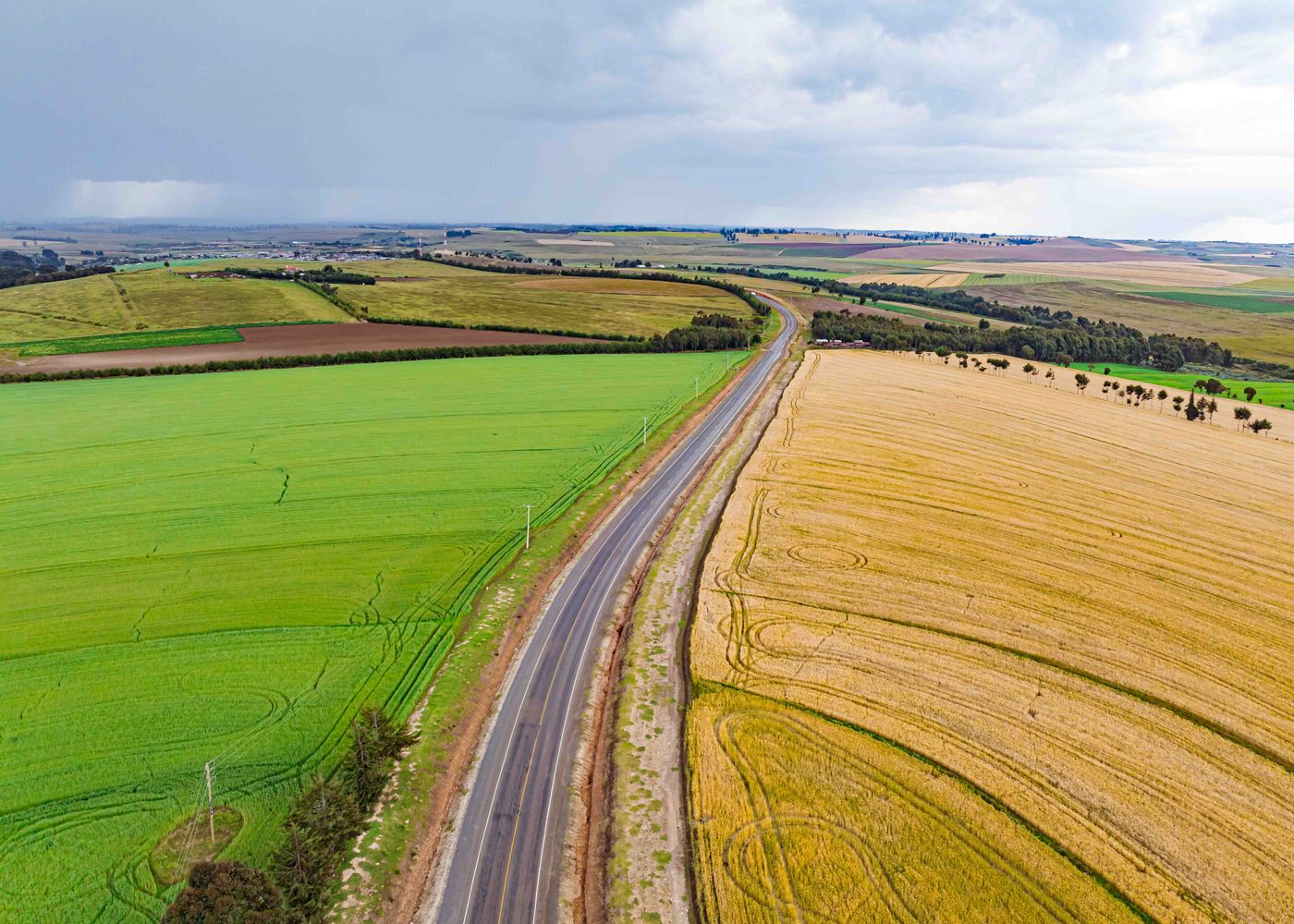
The engine note flattens somewhere over the Kinangop, and the propeller slows to a useless windmill. You are 2,500 feet above a green quilt of shambas, a murram track, a dark line of gum trees and a soda lake glinting to the west, and every one of those surfaces is quietly asking to be landed on.
You have maybe two minutes of glide, less if you waste it deciding. The single choice that now outranks every checklist is which patch of Kenyan ground you commit to, and pilots get this wrong not because they have too few options but because they have too many and choose too late.
This piece is about reading terrain from the air over Kenya specifically: the surfaces our training areas actually offer, and the field-selection discipline that turns an engine failure into a story you tell rather than one told about you.
The Short Version
- A forced landing is survivable far more often than pilots fear, but only if you fly best glide, commit to one field early, and arrive wings level at the lowest safe speed.
- Field selection sits inside a fixed priority order. Aviate (best glide) comes before navigate (pick the field) comes before communicate (Mayday), and nothing jumps that queue.
- The training mnemonic for the field itself is wind, size, surface, slope, surroundings. Over Kenya the surface line is where most of the real judgement lives.
- Kenyan terrain lies to you from height: tea and standing maize read as smooth carpet, ploughed shambas hide furrows, murram roads hide power lines, and the Rift lakes hide mud.
- The two decisions that kill are stretching the glide (raising the nose to reach a field you cannot actually reach) and choosing a field too late to fly a proper approach.
- Highland density altitude means everything happens faster and you touch down at a higher groundspeed, so a marginal surface bites harder than the same surface would at the coast.
Aviate before you navigate: field selection has a queue
The reflex when the engine quits is to grab the throttle and hunt for the cause, or to key the radio. Both are the wrong first move, and both cost you the one resource you cannot buy back.
The FAA's Airplane Flying Handbook orders it plainly: fly the aircraft to best glide first, then select the landing area, then attempt a restart if height allows, then broadcast. That order is not a suggestion, it is a survival ranking.
Best glide speed is the airspeed that gives the maximum lift-to-drag ratio, and it buys you the greatest distance across the ground for the height you are holding. Pitch for it immediately and trim it off, because a glide flown even a few knots fast or slow quietly erases range you will wish you had.
Altitude is simply options in another form. Every hundred feet you conserve by flying the number precisely widens the circle of ground you can still reach.
Wind, size, surface, slope, surroundings: the five checks, weighted for Kenya
The classic field-selection mnemonic is a run of five checks: wind, size, surface, slope and surroundings. It is a solid frame anywhere, but over Kenya the weighting shifts hard toward surface, because our ground offers traps that gentler country does not.
Wind. Land into wind where the field lets you, because it lowers your groundspeed at touchdown and shortens the slide that follows. At highland strips this matters more than the coast, since your true airspeed, and therefore the real touchdown speed, already runs higher than the number on the airspeed indicator.
Size. You need enough length to stop, and that length is greater than a runway because the surface fights your brakes or arrests you outright. Choose the biggest reachable field, not the prettiest one out of reach.
Surface. This is the whole game in Kenya, and it gets its own section below.
Slope. If the field slopes, land uphill, because gravity then becomes a brake instead of an accelerator. Read the gradient from shadows and drainage lines, and refuse to commit to a downhill run you cannot see the end of.
Surroundings. Check what sits at the approach and the stop end: wires, buildings, a gully drop, and the livestock and people who share every rural surface in this country.
Reading Kenyan surfaces from 2,000 feet
A surface that looks landable from height can be the exact opposite on the ground, and the gap between the two is where Kenyan forced landings are won or lost. Here is how the common ones actually behave.
Cultivated shambas and their furrows. A ploughed shamba reads as flat and inviting, and it hides ridge-and-furrow ploughing that runs in one committed direction. Land along the furrows, never across them, because arriving across the ridges can dig a wheel, collapse the gear or flip the aircraft, and from height the plough lines tell you the safe heading before you turn final.
Standing maize. Tall maize can stand two to three metres and completely hides the ground beneath it. It will stop you fast and probably hurt the aircraft, but a wings-level arrival into standing crop dissipates energy and is walked away from far more often than a tree line, so treat it as an energy-absorbing surface rather than a smooth one.
Tea and coffee. Around Kericho, Nandi and Limuru the tea looks like a manicured green carpet, and that is a lie your eyes tell you. Tea bushes are dense woody plants set close together on slopes, so treat an estate as scrub growing on a hill, not as a lawn you can roll across.
Scrub and thorn. Much of the drier training country is acacia scrub and whistling thorn. Low, sparse thorn will decelerate you and is usually a better bet than a solid line of trees, but thick bush hides rocks, termite mounds and erosion gullies, so aim for the most open lane inside it.
Murram tracks and tarmac roads. A road is the great temptation, because it reads as a ready-made runway. It is rarely the gift it looks: rural Kenyan roads carry power lines and poles along at least one side, plus culverts, matatus, boda bodas, livestock and pedestrians, and the murram ones are often crowned and narrow. Wires are close to invisible from the air, and the poles are the only warning you get that they are strung there at all.
The Rift lakes and their shores. Nakuru, Elementaita, Bogoria and Magadi sit directly under busy training routes. Their shorelines look like firm pale beaches and are frequently alkaline mud flats that arrest a nosewheel and tip you over, so open water is a last-resort ditching, not a soft option.
Slope and wind pull in opposite directions
The textbook tells you to land into wind and to land uphill, and Kenyan highland fields will regularly offer you one or the other, not both. When they conflict, you have to know which one wins.
On a short or rough field, slope usually wins, because an uphill roll scrubs energy fast while a downhill one runs away from you even against a headwind. Judge the gradient before you are committed to the approach, not on short final when you can no longer change your mind.
Density altitude sharpens every part of this. At Wilson's roughly 5,500 feet and higher across the Rift, your true airspeed at touchdown sits above the indicated figure, so you arrive carrying more energy and need more distance and more braking than the same field would ask for at Malindi. Our density altitude in Kenya's highlands piece works through why that penalty bites.
The two decisions that kill: stretching the glide and deciding late
When a chosen field looks like it will fall just short, the instinct is to raise the nose and stretch toward it. Raising the nose below best glide does the precise opposite of what you want: it trades airspeed for a brief float, steepens the sink rate, and walks you toward the stall at the worst possible height.
A stall with even a little uncoordinated rudder at 300 feet becomes an incipient spin, and a spin at 300 feet is not recoverable. This is the same mechanism we broke down in the piece on engine failure after takeoff, and it is worth understanding cold in our stall and spin awareness guide, because it kills in the forced landing exactly as it kills in the turnback.
The second killer is indecision. Two adequate fields, each chosen and then abandoned in turn, leave you with neither field and no height to set up for anything.
Pick one field while you still have the altitude to fly a real approach to it, and then commit. A committed approach to an average field beats a beautiful approach to a perfect field you reached too low to configure for.
The startle response: plan for the three seconds you will lose
The real failure will feel nothing like the simulated one your instructor pulls with a warning and a smile. It arrives with a bang or a silence you did not order, and the startle response, that involuntary freeze and stress spike, steals a few clear-thinking seconds before you act.
Human-factors research on startle in the cockpit is consistent on the shape of it, even where it will not commit to a single number: attention narrows, performance dips, and pilots fixate on one thing, usually a restart, while the aircraft keeps descending underneath the fixation. You cannot train the startle away, but you can make the first response automatic so it survives the moment intact.
That is the entire case for a briefed, spoken plan and for best glide as a grooved reflex rather than a calculation. If the pitch attitude for best glide and the instinct to choose a field early are already automatic, the startle takes your analysis but it does not take your hands off the aeroplane.
The road is a trap, and instructors should say so out loud
Here is the one strong opinion in this piece, and it is earned. Too many Kenyan students are quietly taught to scan for a road as the default forced-landing surface, and that instinct is more dangerous than it sounds.
A clean crop field with no wires beats a road almost every time: no oncoming matatu, no poles, and no near-invisible cable waiting in your flare. Teach the field first and the road as the reluctant exception, and you will have taught the habit that keeps people alive.
What to actually do when it goes quiet
None of this is exotic, and none of it needs equipment you do not already have. It needs the order kept and the habits grooved before the day you need them.
- Pitch for best glide immediately and trim it, before you touch anything else. Airspeed is altitude you have not spent yet.
- Pick your field early, from the widest circle of reachable ground, and say the choice out loud so you are committed to it.
- Run the surface read: furrows landed along not across, maize as an energy absorber, tea and thorn as hills not lawns, and a road only when there are genuinely no poles.
- Favour into wind and uphill, and when they conflict on a short or rough field, let the slope win.
- Never stretch the glide. If the field will fall short, choose a nearer one now, while you still have the height to fly to it.
- Fly the aircraft all the way to the ground: wings level, lowest safe speed, flap and configuration as height allows, and accept the surface you committed to.
- Broadcast Mayday on the frequency in use or 121.5 MHz and squawk 7700 only once the glide is flown and the field is chosen, never before.
Frequently asked questions
Should I aim for a road if there is one within glide?
Only if there is no crop or open field within reach and the road is genuinely clear of poles and wires, which most rural Kenyan roads are not. A cable you cannot see will catch you in the flare.
Do I land along the furrows or across them?
Along them, every time. Landing across ridge-and-furrow ploughing can dig a wheel and flip the aircraft, and the plough lines are visible from height, so choose your heading before you turn final.
Is standing maize really a survivable surface?
Wings level and at the lowest safe speed, far more often than a tree line or a wire-strung road. It stops you hard and may damage the aircraft, but tall crop absorbs energy rather than concentrating it into you.
What about ditching in a Rift lake?
A genuine last resort. The soda lakes are shallow and caustic with soft mud shores that flip aircraft on contact, so open water removes the controlled ground roll you want and adds hazards of its own.
Key Takeaways
- Field selection is step two, after flying best glide and before troubleshooting or the radio. Keeping that order is the single biggest survival variable.
- Weight the five checks for Kenya: wind, size, surface, slope and surroundings, with surface carrying most of the judgement over our terrain.
- Read the surfaces honestly. Land along shamba furrows, treat maize and scrub as energy absorbers, treat tea as scrub on a slope, and distrust roads because of their poles and wires.
- Favour into wind and uphill, and let slope win on a short or rough field. Highland density altitude raises your true touchdown speed, so plan for more energy to dissipate.
- Never stretch the glide, and never keep shopping for a better field. Commit early, fly the aircraft to the ground wings level, and accept the surface you chose.
AngaBrief's Environment and Aircraft sections prompt a pilot to record the conditions and performance factors that shape all of this, including field elevation and density altitude, before every flight. It is a preparation and decision-support tool, not a dispatch authority, and it does not fly the aircraft or choose the field for you.