
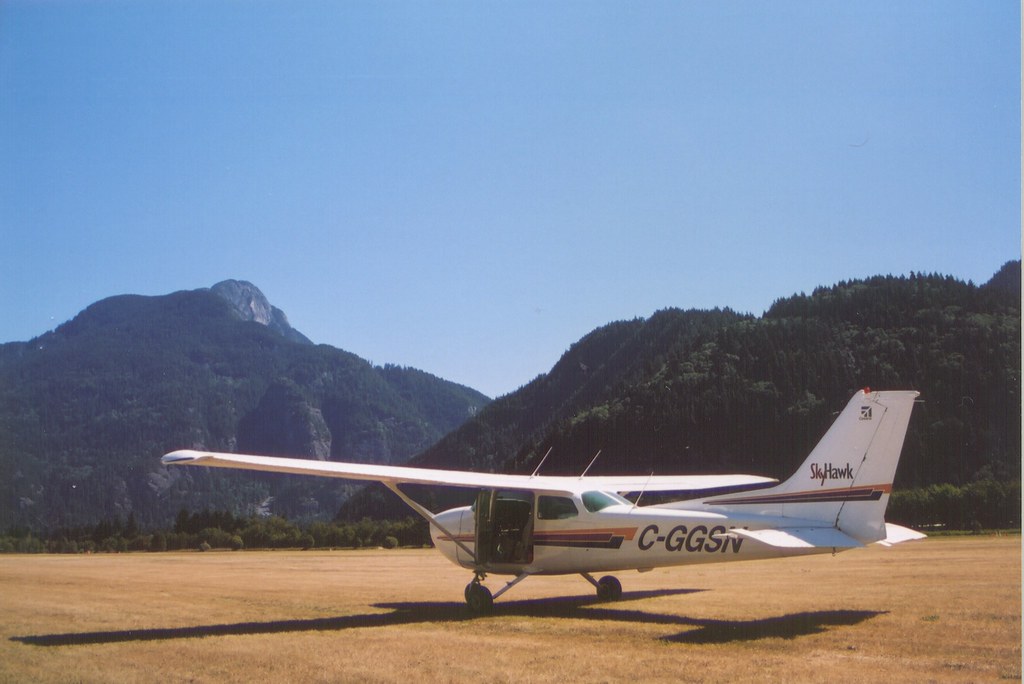
Ask a student pilot what weight and balance is for and most will recite the classroom answer. Add up the empty weight, the pilot, the fuel, the bags, multiply by the arms, check the number falls inside the envelope on the graph.
That answer is correct and almost useless, because it describes an exercise done once on paper before the flight was ever loaded. The real risk shows up later, when a bag gets added, a tank gets topped off, or a fourth passenger climbs in at the last stop, and nobody redoes the sum.
What weight and balance is actually protecting you from
The aircraft's weight and centre of gravity limits are not bureaucratic numbers. They describe the range inside which the aircraft's published performance figures, stall speed, climb rate, control response, actually apply.
Push weight past the certified limit and every one of those figures gets worse at once: longer takeoff roll, shallower climb, higher stall speed, and reduced margin against structural loads in turbulence. The FAA's Aircraft Weight and Balance Handbook, FAA-H-8083-1, is the reference manual for exactly this relationship, and it is worth an instructor's time to walk a student through it once with real numbers rather than the syllabus example.
Centre of gravity does something different and in some ways more dangerous. It changes how the aircraft behaves rather than simply how much it can do.
Aft CG is the one that bites hardest
Most students fixate on the weight number and barely think about where that weight sits. That is backwards, because an aft centre of gravity is the more dangerous failure mode.
The FAA's stall and spin awareness guidance in Advisory Circular 61-67C is blunt about this. As the centre of gravity moves rearward, the elevator has progressively less nose-down authority to recover from a stall, and if a spin develops with an aft CG the aircraft can enter a flat spin from which recovery is often impossible.
That is not a theoretical warning. It is the mechanical reason a full aft baggage compartment, or a heavy passenger seated behind a light one with no adjustment to the load plan, changes the aircraft's stall and spin behaviour before you have done anything wrong in the air.
The accident record is not rare and not exotic
Weight and balance accidents are not test-pilot territory. A peer-reviewed analysis of general aviation accidents linked to weight and CG limit exceedance, published by D.D. Boyd in Accident Analysis & Prevention, 2016, found that operating above certified weight measurably lengthens takeoff and landing distances, degrades climb gradients, and raises the risk of airframe stress failure in turbulence.
The NTSB has issued a dedicated safety alert on the subject, Safety Alert 72, "Minding Weight, Maintaining Balance", because the pattern keeps recurring across piston singles rather than fading out as pilots gain experience. AOPA's Air Safety Institute puts a similar figure on it: more than a hundred weight-and-balance-related crashes in the last decade, a meaningful share of them fatal.
Two specific NTSB investigations show what this looks like in practice rather than in the abstract. A Piper PA-12 loaded roughly 167 pounds over its certified gross weight stalled shortly after departure and entered an uncontrolled descent. In a separate case involving a de Havilland DHC-3 in Alaska, investigators found the aircraft had departed about 509 pounds over gross with its centre of gravity 4.08 inches aft of the aft limit, and it never achieved a safe climb airspeed before stalling.
Neither pilot set out to break a limit. Both loaded the aircraft the way it always got loaded, without recalculating for that day's actual numbers.
That is the pattern worth sitting with, because it is not a story about reckless pilots ignoring a known limit. It is a story about a habit, loading an aircraft the same way it was loaded successfully many times before, quietly outrunning the one calculation that was supposed to catch the day it stopped being safe.
Why the classroom exercise stops protecting you
Ground school teaches weight and balance as a static problem with one correct answer, and that framing is the trap. Real flying loads an aircraft in stages, and every stage is a chance for the number computed that morning to stop being true.
A student calculates weight and balance against the planned load, walks to the aircraft, and finds an instructor has added a training bag, or a passenger has brought more than they said they would, or the fuel truck topped the tanks to full instead of the planned partial fill. Each of those is a five-minute recalculation. Almost nobody does it, because the paperwork already felt finished.
Where this gets dangerous in Kenya specifically
Kenyan flying schools and charter operators run exactly the loading pattern that defeats a once-only calculation, and the bush strip network is where it shows up hardest.
The bush strip reload problem
Safari flying between Nairobi, the coast, and camps around the Masai Mara routinely adds and removes passengers and bags at multiple stops on a single itinerary. The industry's own answer to the risk, an unofficial but near-universal 15 kilogram soft-bag limit per passenger on bush flights, exists precisely because rigid suitcases and uncontrolled bag weight do not fit the aircraft's luggage pod or its balance envelope.
That limit protects the outbound leg. It does nothing for the return leg, when a passenger picked up curios, a cool box, or camera gear at the camp and the aircraft is now loaded differently than the sortie the pilot planned that morning.
Density altitude removes the safety margin you were counting on
A load that is technically inside the weight and CG envelope can still be unflyable if the aerodrome cannot deliver the performance the envelope assumes. The FAA's density altitude guidance, publication FAA-P-8740-2, gives pilots a working rule of thumb: expect to trim maximum usable weight by roughly two percent for every 1,000 feet of elevation and every 10°F above standard temperature, because piston engines can lose twenty to thirty percent of their rated power in hot, high conditions.
Nanyuki, Eldoret, and the highland strips around the Rift Valley sit at exactly the elevations where this bites. A load that is legal on the certificate can still leave you unable to out-climb rising terrain on a hot afternoon, which is the accident pattern the FAA guidance and SKYbrary's "Hot and High Operations" reference both describe as depressingly consistent: a full load, a high strip, a warm day, and a climb that never quite catches up with the ground.
KCAA already expects this to be a live document, not a one-off form
The Kenya Civil Aviation Authority's advisory circular CAA-AC-AWS016C, the Aircraft Mass and Balance Schedule, exists to keep an operator's baseline aircraft weight and CG data current rather than assumed. A flying school's fleet management responsibility does not stop at that baseline schedule.
The schedule tells you what the empty aircraft weighs and where its empty CG sits. What it flies with today is a separate calculation, every time, and that responsibility sits with the pilot in command on the day, not with a document filed months earlier.
Different aircraft, different sensitivity
Kenyan training and charter fleets are not one aircraft, and the margin for error is not the same across them. A C152 with two average adults on board already has very little spare capacity, and a full fuel load can leave almost no legal room for baggage at all.
A C172 or PA-28 has more room to be wrong before it becomes dangerous, which is exactly why it is more common to see complacency creep in on those types. A Cessna 208 Caravan flying a safari circuit, the workhorse of a lot of Kenyan bush charter operations, has a wide cabin and a strong power-to-weight ratio, but that capability invites its own failure mode: loading it like it cannot be overweight, when a full complement of passengers plus their bags plus a fuel top-off for the next leg absolutely can push it there.
The lesson is not that bigger aircraft are safer. It is that every type has a point where the margin runs out, and a pilot who has never seen that point on a particular aircraft is the pilot most likely to fly past it without noticing.
A load-change check that actually catches the problem
The fix is not a more complicated formula. It is a habit of asking one question at the moment the load changes, not only at the moment the flight was planned.
- Did the passenger count change from the plan? Recompute. A single unplanned adult in the back seat of a C172 can move both weight and CG meaningfully.
- Did the fuel load change from the plan? A top-off instead of a partial fill adds weight forward or aft depending on tank position, and it is one of the easiest changes to forget because fuel feels routine.
- Did the baggage change from the plan? This is the one bush operations get wrong most often, because bags accumulate across a multi-stop itinerary rather than arriving all at once.
- Is today's density altitude close to yesterday's? If not, the weight that was safe to depart with yesterday is not automatically safe today, regardless of what the envelope graph says.
None of those four questions require new maths. They require noticing that the load in front of you is not necessarily the load on the form.
What pilots admit on the forums
Weight and balance threads on pilot forums have a familiar shape, close to the pattern seen in fatigue and get-there-itis discussions. Almost nobody admits to deliberately busting a limit.
What comes up instead, repeatedly, is the aircraft that "always flies fine loaded like this," until a hotter day, an extra passenger, or a fuller tank stacks on top of an assumption nobody re-checked. The recurring theme is not recklessness. It is the same recalculation getting skipped once too often, because it had been skipped safely every time before.
The Short Version
- Weight and balance is not a one-time classroom sum. It is a live check that has to be redone whenever the actual load changes.
- Aft centre of gravity is the more dangerous failure mode, because it degrades stall and spin recovery, not just performance numbers.
- Genuine, recurring NTSB and peer-reviewed accident data ties overweight and out-of-limit loading to stalls, long takeoff rolls, and reduced structural margin.
- Kenya's bush strip network, its multi-stop safari itineraries, and its high-elevation aerodromes each independently erode the safety margin a morning calculation assumed.
- The fix is a habit: recompute whenever passengers, fuel, or baggage change, and treat today's density altitude as today's problem, not yesterday's.
AngaBrief's PAVE assessment asks for a fresh Aircraft entry on every sortie rather than letting a student copy yesterday's, which is the right habit even though the tool has no way to see what is actually loaded on board. AngaBrief is not a dispatch authority and does not make the go/no-go call; that decision, with the load actually on board that day, belongs to the pilot in command and their instructor.
Key Takeaways
- Recalculate weight and balance whenever passengers, fuel, or baggage change from the original plan, not only before the first sortie of the day.
- Aft CG is more dangerous than raw overweight because it can remove your ability to recover from a stall or spin.
- High-elevation Kenyan aerodromes can turn a legally loaded aircraft into one that cannot climb, especially on a hot afternoon.
- A KCAA mass and balance schedule sets the aircraft's baseline. It does not replace the calculation for today's actual load.