
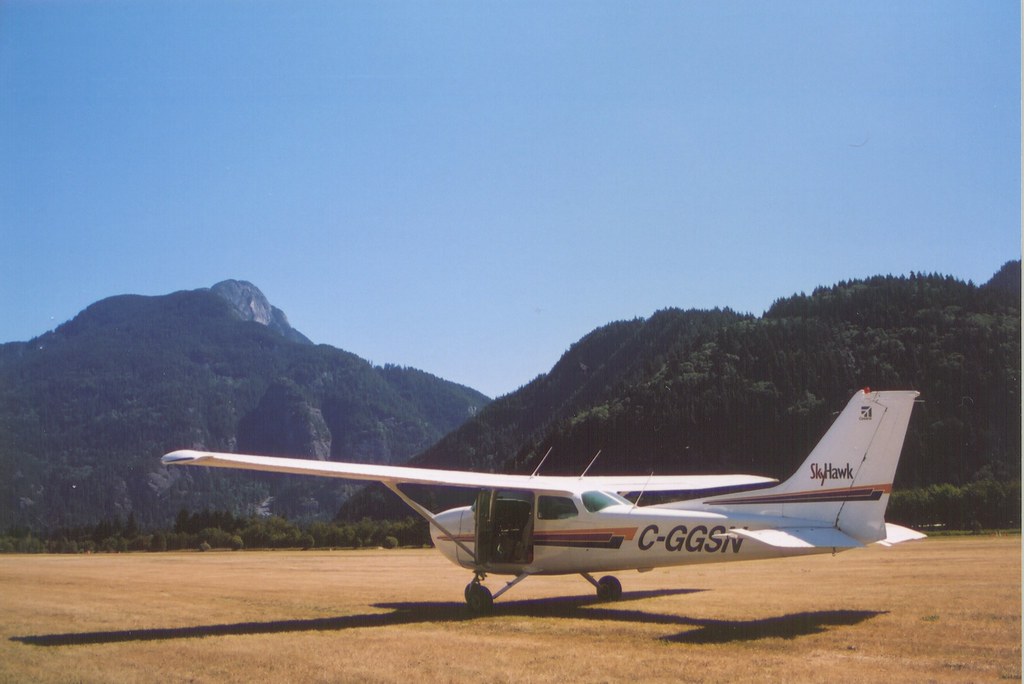
Your early training happens inside a safety net. Wilson has a tower, a published zone, and a controller whose entire job is to stop you hitting someone else.
Then the syllabus sends you on your first solo cross-country, and the destination is a strip with no tower, no AFIS (Aerodrome Flight Information Service), and sometimes nobody on the frequency at all. The net is gone, and the only thing keeping two aircraft apart is whether both pilots do their job properly.
Why this matters more in Kenya than the syllabus admits
Kenya's flying schools teach radio discipline at towered fields first, because that is where students start. Wilson, JKIA, Mombasa, Kisumu and Eldoret all have operating control towers, and KCAA's Aeronautical Information Supplement 31/2026 even sets specific altitude checkpoints for Wilson's approach and departure paths following the runway's 2026 reopening.
That controlled environment is not representative of where most Kenyan flying actually happens once a student starts ranging further. The 28 private and concession airstrips that support safari and upcountry operations have no control tower by definition, and several of Kenya's own KCAA-licensed aerodromes away from the main cities run with little or no continuous air traffic service either.
The gap between "what my instructor drilled into me at a towered field" and "what I actually need at an uncontrolled one" is exactly where avoidable mid-air risk lives. It is also, frankly, where I think Kenyan training under-invests relative to how much flying time students eventually spend there.
What Kenyan law actually says
This is not a grey area you can shrug off as "good practice."
The Civil Aviation (Rules of the Air) Regulations, 2018 (Legal Notice No. 124, Kenya Gazette Supplement No. 71 of 8 June 2018) set it out in black and white.
The regulation on operating within an aerodrome traffic zone says a person shall not fly within a zone the pilot-in-command knows or ought reasonably to know is the traffic zone of an aerodrome that has no air traffic control unit, except for the purpose of taking off, landing, or observing the signals in the signal area with a view to landing. Read that again: entering the zone for any other reason is not a style choice, it is against the regulation.
The companion provision on turns near an aerodrome requires every pilot-in-command to make all turns to the left when approaching to land and after taking off, unless instructed otherwise, and to favour landing and taking off into the wind when the runway layout and traffic allow it. Kenya's rules also carry a dedicated right-of-way regulation governing which aircraft gives way when two converge near an aerodrome.
These three provisions, taken together, are the entire legal skeleton for flying into a field with nobody directing traffic. Everything else, including the radio phraseology below, exists to make that skeleton work in practice.
Right of way still applies, tower or not
Kenya's Regulation 20 right-of-way provision exists precisely because an uncontrolled field has no controller to sequence anyone. It sits inside a framework the regulations themselves say is built on ICAO Annex 2, so the long-standing Annex 2 rules are the practical detail behind it.
Two aircraft converging at roughly the same level: the one with the other on its right gives way. Head-on with a real risk of collision: both aircraft turn right, not left.
Being overtaken: the aircraft in front keeps its course and the one behind passes clear to the right.
None of that requires a radio call to apply. It applies the moment two aircraft share airspace, which is exactly the condition every uncontrolled Kenyan aerodrome creates by default.
The join: arriving like someone who has done this before
The mechanics below come from the FAA's Advisory Circular 90-66C, Non-Towered Airport Flight Operations, issued in June 2023. Kenya is not FAA airspace, but the AC describes the same physics-driven problem every uncontrolled field in the world faces: how do you sequence several aircraft with no controller, using only eyes, radio, and convention.
The preferred method the AC describes is an overhead join. Arrive at least 500 feet above the circuit altitude, clear of the pattern, assess the windsock and any traffic below, then descend on the dead side and join on a 45-degree entry to the downwind leg.
Straight-in approaches are specifically discouraged whenever other aircraft are working the pattern, because a straight-in gives everyone else the least time to see you and the least room to adjust.
Standard circuit altitude in this model is 1,000 feet above the aerodrome unless terrain, noise considerations, or a published procedure says otherwise, and turns go to the left by default, which lines up neatly with what Kenyan regulation already requires. The point of flying a standard, predictable shape is that it lets every other pilot in the area, including the one with no radio, build a mental picture of where you will be next without you having to say it.
The call: self-announce is the whole system
At a towered field the controller resolves conflicts for you. At an uncontrolled field, the self-announce call is the resolution mechanism, which is why AC 90-66C is so specific about its content.
A proper self-announce call states your call sign, your type, your position, your altitude, and your intention, tied to the aerodrome name, on the published common frequency. "Mara North traffic, Five-Yankee-Alpha, Cessna 172, ten miles south, descending through four thousand five hundred, inbound for overhead join, Mara North" tells every other listening aircraft exactly where to look and what to expect next.
The AC is blunt about one specific phrase: "any traffic in the area, please advise" is explicitly not a recognised call and should not be used under any condition. It invites a false sense of coverage, because an aircraft with a dead radio, a pilot on the wrong frequency, or simply someone who has not keyed up yet will never answer, and the silence gets misread as "the sky is empty" instead of "I have no idea who else is here."
The aircraft that never answers
This is the part Kenyan instructors should hammer harder than they currently do. A microlight, a glider, an ultralight, or simply an aircraft with a failed radio can legally be in that circuit with you and never say a word.
AOPA's Air Safety Institute runs its non-towered airport case-study seminars specifically because so many close calls and collisions at uncontrolled fields involve exactly this: one aircraft doing everything right on the radio, and another that was never going to answer regardless. The lesson is not "call more." It is "look more," because the call is for coordination, not for permission, and it was never going to detect everyone.
Treat every uncontrolled Kenyan strip, from a KCAA-licensed upcountry aerodrome to a private safari airstrip, as if there is a NORDO (no radio) aircraft already in the pattern. Fly the standard shape, keep your eyes outside the cockpit through the entire circuit, and let your calls be a courtesy to others rather than a substitute for looking.
Private and concession strips: even less margin
The safari airstrips supplementing Kenya's 12 KCAA aerodromes exist precisely because they serve places with no infrastructure to speak of. Some have a windsock and nothing else, no runway lights, no published frequency on a chart, and certainly no tower.
At these fields the self-announce discipline from AC 90-66C still applies in spirit even where no formal CTAF (common traffic advisory frequency) exists, because the only thing you can broadcast to is whoever else happens to be monitoring a common frequency out of habit. What changes is the visual workload.
Run a careful overhead pass low enough to actually see the surface condition and any wildlife or livestock on or near the strip, because unlike a paved aerodrome, nobody has checked this one for you today.
Instructors: this skill does not transfer automatically from towered training
A student who flies beautifully in Wilson's controlled environment has been trained to respond to instructions, not to generate the entire traffic picture themselves. That is a different cognitive task, and it deserves dedicated instruction before the first solo cross-country, not an assumption that "they'll figure it out."
Brief the overhead join, the 45-degree entry, and the exact wording of a correct self-announce call as their own lesson item, not as an aside during a navigation exercise. Debrief every cross-country with a specific question: did you actually see the other traffic before or after you heard it, if there was any?
What pilots admit about uncontrolled fields
Pilot forums have a recognisable pattern whenever uncontrolled-airport near-misses come up. Almost nobody describes a dramatic near-collision caused by reckless flying.
The far more common story is two aircraft that each flew a technically reasonable pattern, each made reasonable calls, and still ended up closer than either expected because one pilot assumed an empty circuit from a quiet frequency. The second recurring theme is the straight-in approach flown by someone in a hurry, cutting across traffic that was dutifully flying the full pattern exactly as briefed.
Neither story involves a bad pilot. Both involve a pilot who treated the radio as more reliable than it actually is.
The Short Version
- Most of the aerodromes and airstrips a Kenyan student eventually flies to have no air traffic control unit at all.
- Kenyan law restricts flying inside an uncontrolled aerodrome's traffic zone to taking off, landing, or watching the signal area, and it requires left turns near an aerodrome unless told otherwise.
- "Self-announce" is not optional chatter. It is the entire separation system when there is no controller.
- A correct 45-degree entry to downwind, a correct overhead join, and a correctly worded call matter more here than anywhere else you will fly.
- Silence on the radio is not the same as an empty circuit. Treat every uncontrolled field as if someone with no radio is already in the pattern.
AngaBrief's PAVE environment section asks a student to name the aerodrome's facilities, including whether it is controlled, before departure, precisely so this question gets asked on the ground rather than discovered in the air. It is not a dispatch authority, and the decision to fly, and how to fly the circuit once there, stays with the pilot in command and their instructor.
Key Takeaways
- Kenya's Rules of the Air Regulations, 2018 restrict flying inside an uncontrolled aerodrome's traffic zone to takeoff, landing, or watching the signal area.
- Left-hand turns near an aerodrome are the legal default in Kenya unless instructed otherwise.
- An overhead join with a 45-degree entry to downwind beats a straight-in whenever other traffic might be present.
- "Any traffic in the area, please advise" is not a recognised call. State your call sign, type, position, altitude and intention instead.
- A quiet frequency is not an empty circuit. Fly as if a radio-silent aircraft is already there.