
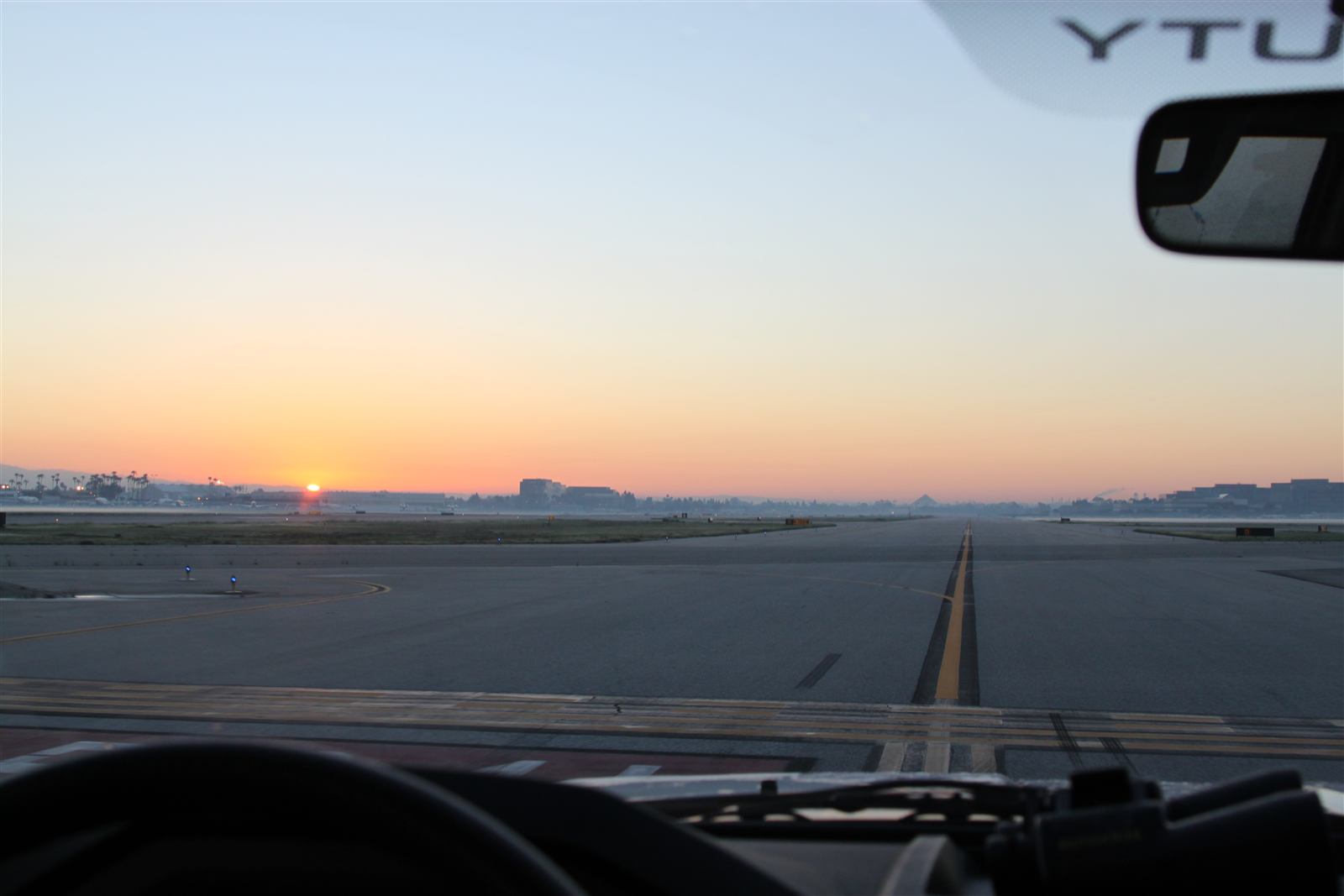
Picture a Saturday morning at Wilson (HKNW). Three flying schools are running circuits off the same runway, a Caravan is inbound from Nanyuki, and your C172 is turning base with another aircraft somewhere on final that you have not yet picked up visually.
Every student in that circuit can recite the exam-room version of right of way. "The aircraft on your right has priority" is the line everyone remembers, and it is also the least useful one the moment two aircraft are both trying to land at once.
That specific situation, two aircraft converging on the same runway, has its own rule, and the rule has a twist that catches pilots who think they already know it. This piece is about that rule, where it actually applies in Kenyan skies, and why treating it as a shield rather than a last resort is the mistake.
The Short Version
- Right of way in Kenya is regulation, not courtesy. It sits in the Civil Aviation (Rules of the Air) Regulations, 2018, built on the ICAO Annex 2 framework Kenya applies as a Chicago Convention signatory.
- There are five situations worth knowing cold: converging, head-on, overtaking, two-or-more aircraft landing, and who gives way on the ground to an aircraft that is landing.
- The landing rule has a genuine twist. The lower aircraft has priority over a higher one approaching to land, but the lower aircraft may not use that priority to cut in front of, or overtake, an aircraft already in the final stages of its approach.
- Kenya's circuits are flown with all turns to the left unless instructed otherwise, which shapes exactly where converging traffic actually meets you.
- At an aerodrome with no control tower, which describes most of Kenya's upcountry strips, nobody is assigning separation for you. Right of way and your own eyes are the entire system.
- Knowing who technically "wins" matters far less than never needing the rule to resolve real proximity. If you are relying on right of way, something upstream of it has already gone wrong.
This is a regulation, not an unwritten courtesy
Kenyan ground school teaches right of way early, often as a memory trick rather than a cited rule. It is worth knowing it is neither folklore nor a courtesy convention.
Kenya's Civil Aviation (Rules of the Air) Regulations, 2018, Legal Notice No. 124, sets these rules out as domestic law. They are built on the general flight rules in ICAO Annex 2, the framework every ICAO contracting state, Kenya included, is obliged to implement.
That matters because the rule is enforceable and specific, not a rough guideline you can shade to suit the moment. It is also, on its own, incomplete: right of way tells you who must give way once two aircraft are already close enough to be a problem, and it says nothing about keeping that problem from arising in the first place.
The five situations every VFR pilot must know cold
Strip away the exam-room phrasing and the rules reduce to five recurring geometries. Each one assumes the pilots involved have already seen each other, which is itself the weak link this piece returns to later.
- Converging at approximately the same level. The aircraft that has the other on its right must give way, with an exception: power-driven aeroplanes give way to airships, gliders, balloons, and to aircraft seen to be towing something.
- Approaching head-on. When two aircraft are approaching each other head-on, or close enough to it that a collision risk exists, each pilot alters heading to the right. Neither aircraft has priority here; both have an identical obligation.
- Overtaking. The aircraft being overtaken has right of way. The overtaking aircraft, climbing, descending, or level, must keep clear by altering its own heading to the right, and stays obligated to keep clear until it is entirely past and clear of the other aircraft, whatever happens to their relative positions in the meantime.
- On the ground or on water. An aircraft taxiing or otherwise moving on the surface must give way to aircraft that are landing or in the final stages of an approach to land.
- Two or more aircraft approaching to land. This is the situation with the twist, and it deserves its own section.
The gotcha: who actually wins when two aircraft are both on approach
Here is the rule most pilots half-remember and then misapply under pressure. When two or more aircraft are approaching an aerodrome to land, the aircraft at the higher level gives way to the one at the lower level.
Read only that first clause and a certain kind of pilot draws the wrong lesson: fly a tighter, lower circuit and everyone else has to get out of your way. The regulation closes that loophole in the very next clause.
The lower aircraft may not use its priority to cut in ahead of another aircraft that is already in the final stages of its approach, and it may not overtake that aircraft either. In plain terms, being lower buys you priority over traffic still manoeuvring to join the approach, not a licence to dive underneath someone who is already established on final in front of you.
This is precisely the situation from the opening scene. You are turning base, lower than the aircraft further out, and there is traffic already on short final that you have only just spotted.
The rule does not hand you priority there. The aircraft on final keeps it, and your obligation is to fit in behind, not to press an advantage the regulation was written to prevent you from claiming.
Where this actually bites in Kenya
Two features of Kenyan flying make this rule more than an exam curiosity. The first is how busy a single circuit can get, and the second is the direction Kenya flies its circuits in the first place.
Kenya's Rules of the Air require aerodrome traffic to make all turns to the left when approaching to land and after taking off, unless the aerodrome or ATC instructs otherwise. That single default shapes where converging traffic actually meets you: joining crosswind, downwind, base, and final all happen on the left-hand side of the runway as a matter of course, so the geometry of who is converging with whom is not random.
Wilson runs multiple flying schools off the same runway on a busy weekend, alongside charter traffic heading out to Nanyuki, the Mara, and the coast. That density means the "two aircraft approaching to land" scenario is not a rare edge case at Wilson, it is a Saturday-morning routine, and the radio calls and sequencing instructions from Tower exist largely to keep that geometry from ever reaching the point where the right-of-way rule has to be invoked at all.
Bush strips flip the same problem into a different shape. Several safari operators can converge on one Mara strip within minutes of each other with no tower and no sequencing authority, which is exactly the scenario covered from the radio-discipline side in the piece on bush strip operations and blind calls.
This piece is the other half of that same problem: once you are both visual and both closing on the same strip, the blind calls tell each other where you are, but the right-of-way rule is what actually decides who yields.
When there is no tower to blame
Most of Kenya's licensed and unlicensed aerodromes have no control tower at all. Wilson, JKIA, and Kenya's other major fields have air traffic control, but the moment you are operating from an upcountry strip or a bush airstrip, that safety net is gone.
The international concept that covers some of these fields, an Aerodrome Flight Information Service, is worth understanding precisely because it is often misunderstood as a lesser form of ATC. It is not the same service at all.
An AFIS unit provides information and advice to help pilots operate safely, and it maintains a watch over the aerodrome, but it is explicitly not an air traffic control unit and it does not separate aircraft. The pilot is responsible for maintaining their own separation from other traffic, which means the right-of-way rule and a good pair of eyes are not a backup system at an AFIS or fully uncontrolled aerodrome, they are the primary system.
That is a different mental model from a towered field, where a controller is actively sequencing you and the right-of-way rule mostly sits in reserve. At an uncontrolled strip, you are the sequencing authority, for yourself and, implicitly, for whoever else is in the circuit with you.
Right of way is not a targeting system
Here is the opinion this piece has been building towards, and it is worth stating plainly. Right of way is a legal answer to a question that should rarely need asking, not a tool for winning an encounter you saw coming.
The US-based Air Safety Institute has studied midair collisions closely, and while its data set is American rather than Kenyan, the underlying physics of see-and-avoid do not change at the equator. Its analysis found that roughly half of midair collisions happen in or near the traffic pattern, and that the large majority of pattern-area midairs happen at aerodromes with no control tower, the exact environment much of Kenyan training and bush flying operates in.
Those numbers describe a failure that has already happened by the time right of way becomes relevant. If two aircraft are close enough that one pilot needs to recall which one legally must give way, both pilots have already let their separation shrink further than it should have.
The rule exists as the correct answer for the moment separation has already failed. Treat it as a licence to hold your track because you are "technically" the one with priority, and you have converted a legal fact into a collision.
The recurring story is closer confusion than collision: a pilot assumed the other aircraft had seen them because they had right of way, only to realise seconds later that the other cockpit had never spotted them at all. The lesson people draw, again and again, is the same one this piece is making. Right of way tells you who is legally correct after the fact, and it is a poor substitute for assuming nobody has seen you until you have positive visual contact and a plan that does not depend on the other pilot doing the right thing.
Frequently asked questions
What regulation actually covers right of way in Kenya?
The Civil Aviation (Rules of the Air) Regulations, 2018, Legal Notice No. 124, sets out Kenya's right-of-way rules domestically. These implement the general flight rules in ICAO Annex 2, which Kenya applies as a contracting state to the Chicago Convention.
Who has right of way when two aircraft are converging?
The aircraft that has the other on its right must give way, at approximately the same level, with exceptions for airships, gliders, balloons, and aircraft towing another object or aircraft, which are all given priority over a power-driven aeroplane.
What happens when two aircraft are both approaching to land?
The higher aircraft gives way to the lower one, but the lower aircraft cannot use that priority to cut in front of, or overtake, an aircraft that is already in the final stages of its approach.
Does right of way still apply at aerodromes with no control tower?
Yes, and it matters more there, not less. With no controller sequencing traffic, the right-of-way rule and your own visual scan are the entire separation system, whether the field has an Aerodrome Flight Information Service or no service at all.
Key Takeaways
- Right of way in Kenya is codified law under the Rules of the Air Regulations, 2018, built on ICAO Annex 2, not an informal convention.
- Five situations cover almost every case: converging, head-on, overtaking, ground traffic giving way to landing aircraft, and two-or-more aircraft approaching to land.
- The landing rule's twist is the one worth memorising properly: lower beats higher, but never by cutting in front of, or overtaking, an aircraft already established on final.
- Kenya's left-hand circuit default and Wilson's multi-school traffic density make this rule a live, weekly concern rather than an exam topic.
- At uncontrolled and AFIS aerodromes, which cover most of Kenya's upcountry and bush strips, there is no controller separating you from other traffic. The right-of-way rule and your own eyes are the whole system.
- Treat the rule as a fallback for when separation has already thinned too far, never as grounds for holding your track because you believe you are "technically" correct.
AngaBrief's Environment and External Pressures sections prompt students to think through circuit density and traffic complexity before they fly, precisely so that questions like these get worked through on the ground rather than at 500 feet. It does not fly the pattern for you and it does not decide who gives way in the air.
That judgement, like every go or no-go call, stays with the Pilot in Command and their instructor.