
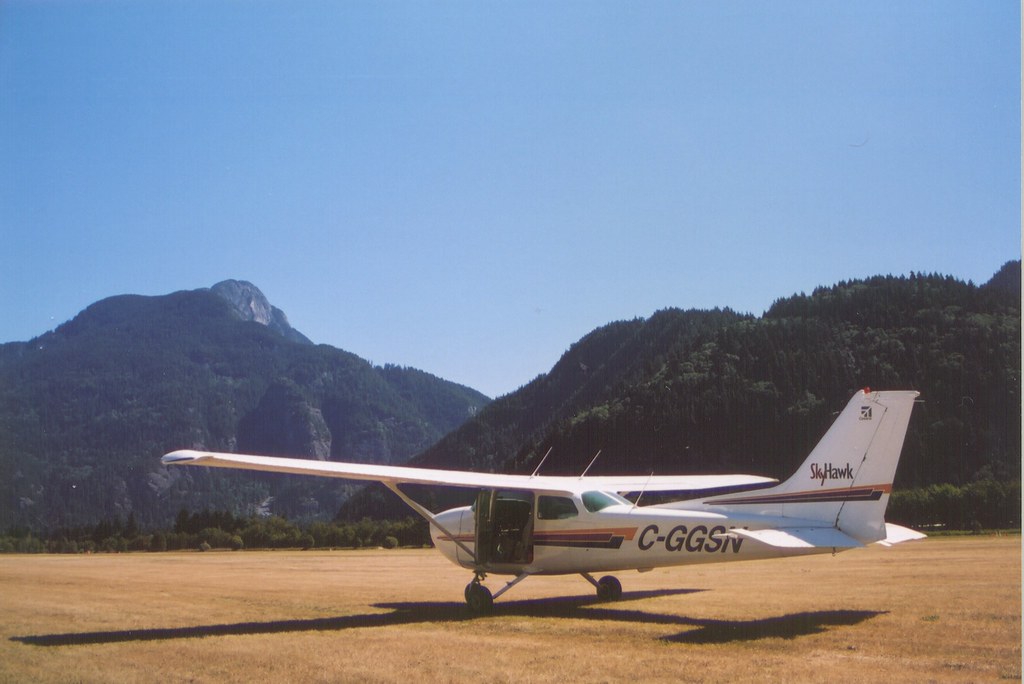
It is six in the morning at Wilson and you are flying a group out to a strip in the Mara. The forecast on your phone covers Wilson in reasonable detail, and it falls silent the moment your route crosses the escarpment.
Nobody official has looked at the weather over your actual route today, because no station exists out there to look. The only person who genuinely knows anything is the instructor who flew the same leg yesterday afternoon, if you think to ask, and if they think to mention it.
The Short Version
- A PIREP, a pilot weather report, is a short account of what you actually encountered in the air: cloud, turbulence, icing, visibility.
- Kenya's official weather-reporting network covers a handful of aerodromes properly. Past them, including every upcountry and bush strip in the country, there is no routine report at all.
- The United States has studied pilot underreporting of weather for years, and the reasons are mundane: workload, habit, and a vague sense that nobody wants to hear it.
- Kenya carries every one of those reasons, plus one the US mostly does not: nobody is sitting on frequency at an upcountry strip whose job is to ask you for a report.
- An informal version already exists, in radio calls and WhatsApp groups, but it is undirected and forgotten by lunchtime.
- A five-element report, said out loud or typed into a group chat, costs fifteen seconds and can change the next pilot's decision.
What a PIREP actually is
A PIREP is simply a pilot telling air traffic services, or anyone else listening, what the weather is actually doing where they are. The FAA's own reporting form lays out the structure: report type, location, time, altitude, and aircraft type are the mandatory core, with sky cover, visibility and weather, temperature, wind, turbulence, icing, and a free-text remarks field added as the situation calls for them (FAA PIREP Form).
A routine report starts with the letters UA. A report of genuinely hazardous weather, severe turbulence or severe icing, starts UUA instead, which flags it for priority handling.
Here is the part most pilots never hear, because it only ever gets taught as the strict version: the FAA's own guidance explicitly tells pilots not to be overly concerned with exact format or phraseology when making a report. A rough version delivered promptly beats a perfect version that never gets said.
Internationally, the same idea exists as the special air-report, built into the ICAO framework that underpins meteorological service for international air navigation. Regulatory guidance built on that framework lists a fixed set of triggering phenomena, severe turbulence, severe icing, and heavy dust storms among them, and places a duty on the air traffic unit that receives the report to pass it to the responsible meteorological office without delay (UK CAA regulatory library, aircraft observations and reports).
That duty to forward is the whole point. A report you make is supposed to travel further than the one aircraft that happened to be listening.
Kenya's weather network stops at a handful of fields
Kenya's aerodrome network runs from Wilson and Jomo Kenyatta through a dozen other KCAA-licensed fields to dozens more private and concession airstrips supporting safari and upcountry flying. Official, routinely issued weather reports do not follow that network very far.
When we checked across AngaBrief's own aerodrome database, only a small fraction, around eight of forty aerodromes, returned a live METAR at all, as we covered in detail in our METAR decoder for Kenyan student pilots. The rest, including every single bush and concession strip in the country, simply has no live official observation to check.
That is not a criticism of the Kenya Meteorological Department. Observation networks are expensive, remote strips are exactly where they are hardest to justify, and the same gap exists in sparsely served regions worldwide.
It does mean something specific for how you plan, though. For most of the destinations a Kenyan flying school actually flies to, bush strips included, the official picture ends at the nearest towered field, and everything past that point is estimation unless a pilot fills the gap.
Why pilots do not report, and why Kenya has it worse
This is not a uniquely Kenyan failure. The US National Transportation Safety Board has studied pilot weather reporting for years, prompted by a string of accidents where the information that could have changed a decision existed in someone's head and never reached anyone else.
The Board's findings on why pilots underfile are almost disappointingly human: cockpit workload at the exact moment a report would matter, a vague fear of drawing scrutiny, and simple lack of confidence in the format, on top of pilots just not grasping how much their report is worth to someone else (AOPA, on the NTSB's push to improve the PIREP system). None of that requires a particular country or a particular aircraft type.
Kenyan training carries every one of those same reasons. It also carries one the US largely does not, because most of American general aviation flies within reach of a controller or a flight service station whose job includes actively soliciting reports from aircraft on frequency.
An upcountry Kenyan strip, or a bush airstrip on the Safarilink network, has nobody in that role. The frequency, where one is even monitored, exists for traffic calls between pilots, not for a ground station fishing for a weather update.
That absence matters more than it sounds. In the US system, a controller's habit of asking fills part of the gap pilot reticence leaves behind.
In Kenya, with nobody positioned to ask, the entire system runs on whether a pilot volunteers something unprompted. Most of the time, understandably, they do not.
The null report nobody bothers with
One specific NTSB finding deserves its own section, because it is the most counterintuitive and the most useful. The Board's 2021 safety recommendation on turbulence reporting found that pilots submitting a "null" report, confirming that forecast turbulence or icing did not actually happen, improves forecasting just as much as a hazard warning does, and that null reports are chronically underfiled because pilots assume a boring flight is not worth mentioning (NTSB Safety Recommendation A-21-025-045).
Apply that directly to Kenyan highland and Rift Valley flying. "It was smooth at nine and a half thousand over the Aberdares this morning" is exactly as useful to the next instructor planning the same route as a turbulence warning would be, because it rules an option in rather than out.
Our piece on Rift Valley turbulence covers why that terrain generates mechanical turbulence unevenly and unpredictably through the day. A negative report from an hour earlier, on the same route, at the same altitude, is some of the best data a following pilot could ask for, and almost nobody thinks to send it.
A format that survives a Kenyan radio call or a WhatsApp message
You do not need the full twelve-element form to make a report worth having. Five things cover almost every case a Kenyan student or instructor will actually encounter: where you were, when, what altitude, what you actually saw, and how bad it was.
"Over Naivasha, one-zero-fifteen local, eight thousand five hundred, moderate turbulence below the ridge line, smooth above it" takes about ten seconds to say and gives a following pilot a genuinely actionable altitude choice. That sentence is built from exactly the same bones as the FAA's formal UA report, just spoken in plain language, which the FAA's own guidance says is perfectly acceptable.
Where you send it matters as much as how you phrase it. A report of a genuinely hazardous phenomenon, severe turbulence, severe icing, a dust storm cutting visibility hard, should go to whichever air traffic unit you are in contact with first, because that unit carries the duty to pass it on to the meteorological office.
A school WhatsApp group or a casual radio call to the next inbound aircraft is a useful supplement to that, never a replacement for it. Use both, in that order of priority, and the report actually reaches the people positioned to use it.
Ask first, do not wait for a volunteer
Everything above assumes you are hoping someone else offers a report. The faster fix is to stop waiting and ask directly, the way a controller would if one were sitting on your frequency.
Before a flight to a strip you have not flown that day, find out who else has, and ask them specifically. "Anyone flown into Mara North yet this morning, how is the ridge on short final" takes the same fifteen seconds as giving a report and very often gets one back.
This works on the ramp before start-up, on a shared operator's radio once airborne, and in the same school WhatsApp group that otherwise sits quiet until something goes wrong. The habit that actually closes Kenya's reporting gap is not a new rule or a new form.
It is a culture where asking for a report is as normal as asking for the wind, and where giving one back is not treated as showing off or wasting airtime. A CFI (Certified Flight Instructor) who asks the question out loud in front of students, every single flight, teaches the habit faster than any briefing slide could.
What pilots actually share in the group chat
Look at how weather information actually moves through flying-school group chats and a pattern emerges fast. Reports flow freely after something has already gone wrong, a diversion, a rough ride somebody wants to talk about, a strip that turned out boggier than expected.
They flow far less freely before a flight, which is exactly the direction that would help someone else decide. The quiet group chat on a given morning gets read as "nothing to report," when it usually means nobody who flew that route yet has bothered to say anything either way.
The instructors who notice this pattern tend to say the same thing in different words: the useful message is the boring one sent before departure, not the exciting one sent after a scare. Getting a culture to send the boring message is harder than it sounds, because nobody feels they have earned the airtime to announce that a flight was unremarkable.
That reluctance is the entire problem in miniature. An unremarkable flight is precisely the data point the next pilot needs most, and precisely the one nobody thinks to report.
AngaBrief's pre-flight weather section pulls the official report for a departure aerodrome where one exists, and says plainly when it does not, which for most Kenyan destinations is the honest answer. It records the picture a pilot and instructor had in front of them; the go or no-go decision, and whatever gets said on frequency afterward, always rests with the pilot in command and their instructor, not with any tool.
Key Takeaways
- A PIREP is five plain facts said promptly, not a formal document, and rough but timely beats precise but never sent.
- Most Kenyan flying-school destinations, upcountry fields and bush strips especially, have no live official weather report at all.
- Report genuine hazards to air traffic services first, since they carry the duty to pass the report to the meteorological office; treat the group chat as a supplement.
- An unremarkable flight is a useful report too. Say it anyway.