
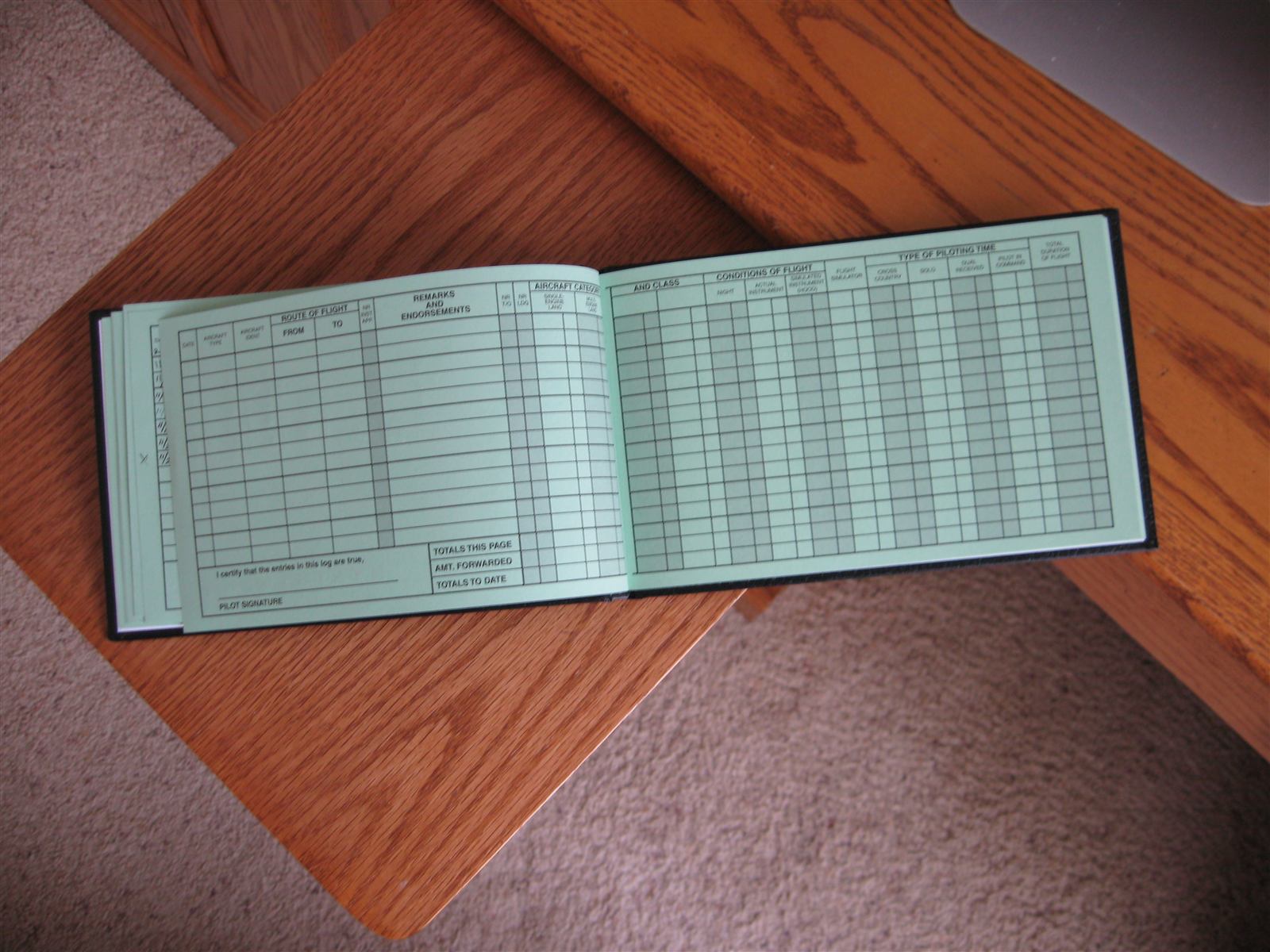
Most students treat their logbook like a diary. Write the date, write the hours, get a signature, move on.
It is not a diary. It is the single document the Kenya Civil Aviation Authority (KCAA) will ask you to produce the day you apply for a licence, renew one, or move schools, and a diary entry does not survive that kind of scrutiny.
The Short Version
- KCAA's own licensing circulars require a certified personal logbook, or an acceptable flying record, before it will issue or renew a licence.
- An endorsement is a specific regulatory statement, not a signature of approval. Mixing the two up is how entries get thrown out.
- Real enforcement cases, from a flight instructor's suspension for an unsigned logbook to a student's conviction for inflated hours, show logbook problems get treated as seriously as flying ones.
- Kenya's training pattern, where a student often sees several instructors and sometimes more than one school, multiplies the number of handoffs where a logbook can quietly stop holding up.
- The fix is boring discipline, not paperwork cleverness: sign the same day, record what actually happened, and never let an entry wait for later.
What a logbook is actually for
Internationally, the personal flying log book exists for one purpose. It lets a pilot prove flying experience to a regulator without needing the regulator to have been in the aircraft.
The International Civil Aviation Organization (ICAO) sets this out in Annex 1 to the Chicago Convention, the global personnel licensing standard that KCAA's own regulations are built on. Annex 1 treats the personal log book as one of the accepted ways to evidence a pilot's recent experience, alongside an operator's own training records.
That framing matters. A logbook is not where you record how a lesson felt.
It is where you build the only evidence that will later satisfy someone who was not there.
Students rarely think about it this way until the moment they need the evidence and discover a gap. A missing signature, a vague entry, a page that does not add up.
By then the person who could have fixed it in thirty seconds may be a CFI (Certified Flight Instructor) who left the school, or a school you no longer train at.
What KCAA actually asks to see
KCAA's advisory circular on flight crew member licence applications, CAA-AC-PEL 001, is explicit. Applicants must provide a certified personal logbook or an acceptable flying record when they apply.
This is not a formality bolted onto the real requirement. It is the requirement, because KCAA has no independent way to verify your hours other than the logbook you present and the school records behind it.
The same circular family covers renewal and re-issue, most recently updated in January 2026 for the student pilot licence under CAA-AC-PEL001D. KCAA's forms for Commercial Pilot Licence (CPL) and Private Pilot Licence (PPL) renewal, O-PEL003 and O-PEL002, likewise call for supporting flying-experience evidence.
The exact recency figures differ by licence category. They are worth confirming directly against the current circular for your licence rather than against a secondhand summary, because advisory circulars get revised and a stale figure is worse than no figure.
What does not change across revisions is the underlying logic. KCAA is not asking you to own a logbook, it is asking you to own a logbook that would survive someone else checking it.
The endorsement is not the signature
Here is the distinction most students never get taught properly. A signature says "I was present."
An endorsement says something much more specific: that a named training requirement was met, on a given date, by a named instructor who held the authority to certify it.
In the United States, the Federal Aviation Administration (FAA) runs a long-standing advisory circular series, AC 61-65, written to standardise exactly this kind of certification endorsement. It is the most thoroughly documented version of this idea anywhere in the world, and the underlying principle travels even though the section numbers do not.
Kenya's own regulations do not publish the FAA's sample wording. The logic underneath is identical: an endorsement for a knowledge test is not the same authorisation as an endorsement for a practical test, and a generic "well done, ready to go" note in the margin is neither.
Flying Magazine has reported designated examiners finding, on the day of a practical test, that a candidate's logbook simply does not contain the cross-country experience the applicant believed it did. The flight happened; the entry describing it did not do its job.
That is the trap. The training can be real and the logbook can still fail, because a logbook is judged on what it says, not on what you remember doing.
Three cases that show this is not theoretical
It is tempting to file logbook discipline under "paperwork," a lesser category than actual flying skill. Three real cases argue otherwise.
The instructor who forgot to sign
The National Transportation Safety Board (NTSB) has upheld a 60-day suspension of a flight instructor's certificate for failing to sign a student's logbook after finishing the student's training. The instructor argued that emails and invoices documenting the work should count instead.
The Board disagreed. The signature in the logbook is the requirement, not a substitute for it.
Read that outcome carefully. The instructor did the training, and the training clearly happened.
None of that mattered once the signature was missing, because the regulator does not certify flying. It certifies the record of flying.
The instructor who signed the wrong lesson
AvWeb reported an Illinois instructor who lost six months of certificate privileges for signing a student's logbook entry for a lesson that another instructor had actually flown. His defence was that the training itself was done properly and the signature was simply a mix-up.
The outcome was the same kind of lesson from the other direction. An endorsement is a personal certification by the specific person who did the specific training.
Convenience signing, even when nothing about the flying was actually wrong, breaks the thing the signature exists to guarantee.
The student who inflated his own hours
A federal case out of Waterloo, Iowa shows what happens when a pilot edits the record rather than an instructor. Fahad Al-Daous pleaded guilty to making a false statement to the FAA after inflating his own pilot-in-command (PIC) time on applications tied to his instrument rating.
His logbook reflected roughly 90.3 hours of PIC time and 41.1 hours of cross-country PIC time that he had not actually flown. The flight school caught the discrepancy by comparing his FAA logbook against its own internal billing records, and he was sentenced to four years of probation.
Notice how he got caught. Not by a sharp-eyed examiner catching a typo, but by someone cross-checking the logbook against a completely separate record that was also tracking the same hours.
That is worth sitting with, because it is exactly the kind of cross-check a well-run Kenyan flying school is also in a position to do.
Kenya's multi-school reality makes this harder
Here is where this stops being a generic aviation-safety point and becomes a specifically Kenyan one. A growing share of Kenyan students, and a good number of instructors, train or teach across more than one school rather than staying with a single organisation for an entire licence.
Cost, aircraft availability, and instructor schedules all push people toward spreading their flying across more than one place. That flexibility is sensible and worth having.
But every one of those handoffs is a place where a logbook can quietly stop holding up. A lesson flown at one aerodrome with one CFI needs to be legible and certifiable to a completely different instructor reviewing the book months later at a different school, possibly for a licence stage that instructor had no part in training.
If the earlier entries are vague, unsigned, or ambiguous about aircraft type, the second instructor has nothing solid to build on. There is no easy way to fix that retroactively once the first instructor is hard to reach.
This is not a hypothetical problem invented for this article. It is the direct, practical cost of a training market that, sensibly, lets students and instructors move between schools, and the administrative discipline it demands in return is the part that gets skipped.
A discipline that actually holds
None of this requires anything clever. It requires doing the boring thing every single time instead of most of the time.
- Sign the same day. An entry signed a week later is an entry reconstructed from memory, and memory is exactly what a logbook exists to replace.
- Record what happened, not what was planned. If the lesson changed in the air, the entry should say so, because a logbook that matches the flight plan instead of the flight is the first thing a careful reviewer will doubt.
- Match the aircraft precisely. Type, registration, and date all have to agree with the aircraft's own tech log and the school's booking record, which is exactly the cross-check that caught Al-Daous.
- Know which endorsement you are being given. Ask your CFI directly what requirement a given sign-off satisfies. If neither of you can state it precisely, it probably is not a valid endorsement yet.
- Close the loop before you leave a school. Get every outstanding entry and endorsement finalised before you go, not after, because the instructor who trained you is far easier to find this week than in a year.
What pilots argue about when this comes up
Flight-training forums return to a handful of recurring arguments whenever a logbook problem surfaces, and the pattern is more useful than any single thread. One recurring thread is what happens when a student discovers, long after the fact, that an instructor never came back to endorse a block of dual hours.
The practical fixes people land on are unglamorous: contact the instructor through their current employer, get a dated note or a label with the missing training and a fresh signature, and attach it properly rather than trying to rewrite the original page.
A second recurring argument is sharper and more unsettled. If the specific training a regulation requires was never properly logged in the first place, does a later endorsement based on that training count at all, or was it invalid from the moment it was written?
Pilots do not agree on the answer, which is itself the point. Nobody wants to be the test case for that argument in front of an examiner or an auditor.
The quieter consensus underneath both arguments is the one worth keeping. Fixing a missed signature is normal and recoverable.
Signing for training that did not happen, or that someone else gave, is treated as a different order of problem entirely, and pilots on both sides of these threads know it.
AngaBrief's own audit log is a separate record from a pilot's personal logbook. It exists to capture a student's pre-flight risk assessment and an instructor's review, not flight hours, and KCAA-compliant audit entries are append-only by design so nothing in that trail can be quietly edited later.
It does not replace your logbook and it does not make the go or no-go call. That decision stays with the pilot in command and their instructor, always.
Key Takeaways
- A logbook is evidence for someone who was not there, not a diary of how training felt.
- KCAA's own circulars require a certified logbook or acceptable flying record at licence issue, renewal, and re-issue.
- An endorsement certifies a specific requirement was met by a specific instructor. A friendly signature is not the same thing.
- Real NTSB and FAA enforcement cases show unsigned, misattributed, or inflated entries get treated as seriously as flying errors.
- Kenya's multi-school training pattern multiplies the handoffs where a logbook can quietly fail, so close every entry before you move on.