
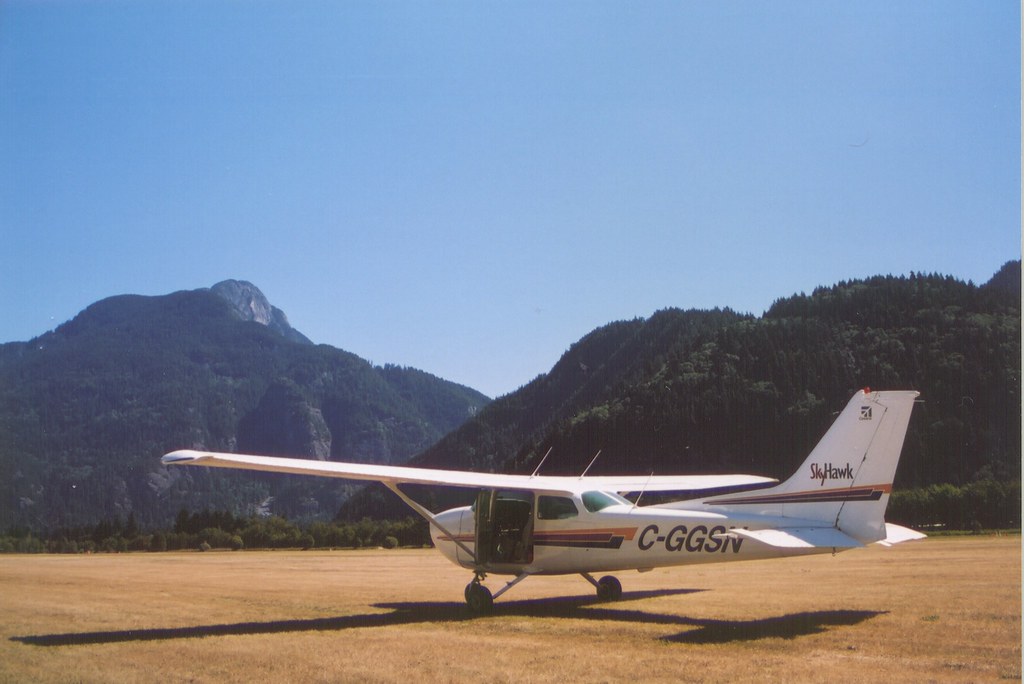
A student planning a coastal leg to Malindi or Lamu will check fuel reserves twice, check weight and balance once, and never once open the baggage compartment to check whether the life jackets are even in the aircraft.
The same student flying into a Masai Mara bush strip will worry about the murram surface and the density altitude, and never ask whether the aircraft is carrying the signalling equipment Kenyan regulation actually expects it to carry over that kind of terrain.
The Short Version
- Kenya's Civil Aviation (Operation of Aircraft, General Aviation Aeroplanes) Regulations, 2018 require a life jacket or equivalent individual flotation device for every occupant on an extended flight over water beyond gliding distance from shore.
- For a single-engine landplane, that requirement is triggered by any en-route segment beyond gliding distance from shore, or any take-off or approach path disposed over water where a mishap could plausibly lead to a ditching.
- Separately, aeroplanes operated over land areas KCAA designates as places where search and rescue would be especially difficult must carry signalling devices and life-saving equipment appropriate to the terrain overflown.
- An Emergency Locator Transmitter carried under Kenyan operating rules must transmit on both 406 MHz and 121.5 MHz, and comes in fixed automatic, portable automatic, and deployable automatic types.
- None of this is optional safety theatre. It is a specific regulatory response to Kenya's actual geography: a coastline, a Rift Valley of sparsely populated highland strips, and a savanna full of bush aerodromes far from the nearest town.
The rule most coastal pilots have never heard stated precisely
"Gliding distance from shore" sounds informal, but it is the actual operative phrase in Kenya's General Aviation Aeroplanes Regulations, 2018. For a single-engine landplane, the life jacket requirement is triggered specifically when a flight goes beyond gliding distance from shore, or when the take-off or approach path itself is positioned over water in a way that could plausibly end in a ditching if something went wrong.
That is a meaningfully narrower trigger than "any flight near the coast," and it is also easy to misjudge in the moment. A coastal circuit that stays comfortably within gliding range of the beach the whole time does not trigger the rule the same way a direct leg out over open water toward an offshore approach does.
The regulation puts the actual judgement call on the pilot in command. You are expected to weigh the real risk to occupants in the event of a ditching, factoring in sea state, sea and air temperature, distance from land suitable for an emergency landing, and the availability of search and rescue in that specific area, not just tick a box because the coastline is visible out the window.
Where the flotation device requirement is triggered, it applies to every occupant, not just the pilot, and each device has to be stowed somewhere genuinely accessible from the seat it belongs to. A life jacket buried under bags in the back does not satisfy a rule written around actually being able to reach it in an emergency.
The equivalent rule for land, and why the Mara supplement makes it relevant
Water is not the only geography the regulation accounts for. Aeroplanes operated across land areas that KCAA designates as places where search and rescue would be especially difficult are required to carry signalling devices and life-saving equipment appropriate to the terrain actually overflown, and aeroplanes on all flights are expected to carry ground-air signal codes for search and rescue purposes.
Read that plainly against Kenyan geography and the relevance is obvious. A Mara safari strip, a remote highland aerodrome, or a bush strip well outside the reach of a quick road response is precisely the kind of terrain that rule was written for.
Our piece on bush-strip operations covers the surface and performance side of that flying. This is the equipment side, and it deserves the same seriousness.
The specific list of what counts as "appropriate" equipment varies with the terrain and is set by KCAA designation rather than a single universal checklist, which is exactly why confirming the current requirement for your specific route with your school and KCAA matters more than assuming a generic kit covers it.
That designation-based structure exists because Kenya's geography is genuinely varied. A highland strip a short drive from a main road carries a different practical search and rescue picture than a bush aerodrome hours from the nearest settlement, and a rule written around actual terrain difficulty, rather than a flat national standard, reflects that difference honestly.
The ELT itself
An Emergency Locator Transmitter, ELT, is the piece of equipment most students can name without being able to explain. Under Kenyan operating rules, an ELT carried on board must transmit on both 406 MHz and 121.5 MHz, the dual-frequency standard that lets modern satellite-based search and rescue systems pick up an activation and localise it precisely.
Three main types exist, as documented by SKYbrary's ELT reference: a fixed automatic ELT permanently installed in the airframe and triggered by impact, a portable automatic ELT that can be removed and manually activated by a survivor, and a deployable automatic ELT that ejects from the airframe on impact. Which type a given aircraft carries depends on its equipment fit, not pilot preference on the day.
An ELT is only as useful as its battery and its accessibility. A unit with an expired battery, or one buried behind cargo where a survivor cannot reach it to manually activate a portable unit, is not meaningfully different from having no ELT at all.
The gap between "technically required" and "actually packed"
Here is the one opinion in this piece, earned from how casually this equipment tends to get treated on routine charter and training flights. Survival equipment that sits in an aircraft for months without anyone checking its condition is ramp-check theatre, not genuine preparedness.
A life jacket with a slow leak in its inflation cell, an ELT with a battery past its replacement date, or signalling equipment nobody on board actually knows how to use, all satisfy a checklist glance while failing the actual purpose the regulation exists for. The equipment being physically present is the minimum bar, not the whole standard.
Treat this kit the way you would treat a fire extinguisher: present, inspected on a real schedule, and something every occupant, not just the pilot, has been briefed on how to use before it is ever needed.
Where this belongs in your PAVE brief
The Aircraft category of the PAVE framework is where this equipment check actually belongs, alongside fuel state and weight and balance, not as an afterthought bolted onto the walkaround. Before any flight with a genuine water or sparsely-populated-terrain segment, confirm what equipment is required for that specific route, confirm it is physically on board, and confirm it is accessible and within date.
Instructors briefing a first coastal or bush cross-country should demonstrate exactly where the equipment lives in that specific aircraft and how to use it, the same way a first-solo brief covers the emergency checklist. A student who has never actually handled the life jacket or located the ELT switch is not meaningfully covered by the equipment simply existing in the aircraft.
How to actually confirm what your route requires
Do not guess your way through this from memory of a similar flight last season. Confirm the current specific requirement for your planned route through your school's operations manual, the relevant AIP Supplement, and, where the picture is genuinely unclear, a direct query to KCAA before you plan around an assumption.
Terrain designations and equipment expectations are exactly the kind of detail that can be updated between your last flight on a given route and your next one. Treat the confirmation step as part of your route planning, not a one-time lesson you learned during initial training and never revisited.
A school that flies the same coastal or bush routes regularly should keep this confirmation current at the operations level, not leave every individual pilot to re-research it from scratch before each flight. That is exactly the kind of standing reference an operations manual exists to hold.
What operators and instructors say about survival kit habits
Discussion among general aviation operators who fly remote or over-water routes regularly returns to a familiar theme: the equipment that gets checked seriously is the equipment someone has made a specific person responsible for checking, on a specific schedule, rather than equipment that is assumed to be fine because nobody has needed it yet.
The operators who describe genuine confidence in their kit are consistently the ones who treat a survival-equipment check as a standing item with a name attached to it, not a line on a checklist everyone assumes someone else already covered. That distinction, ownership over assumption, is the entire difference between compliant-on-paper and actually prepared.
Frequently asked questions
Do I need a life jacket for every coastal flight in Kenya?
Only for the specific segment of a flight that goes beyond gliding distance from shore, or where the take-off or approach path is positioned over water with a real ditching risk. A circuit that stays within gliding range of the beach does not by itself trigger the requirement.
What equipment is required flying to a remote bush strip like those in the Mara?
Aeroplanes operating over land areas KCAA designates as places where search and rescue would be especially difficult must carry signalling devices and life-saving equipment appropriate to the terrain, plus ground-air signal codes required on all flights. Confirm the current specific requirement for your route with your school and KCAA.
What frequencies must a Kenyan ELT transmit on?
Both 406 MHz and 121.5 MHz, the dual-frequency standard used by modern satellite-based search and rescue systems.
Who decides whether a flight needs this equipment, the school or the pilot?
The regulation places the ditching-risk judgement on the pilot in command, who must weigh factors including sea state, temperatures, distance from land, and search and rescue availability for that specific flight.
Is having the equipment aboard enough to be compliant?
Physical presence is the regulatory minimum, but equipment with an expired battery, a slow leak, or that occupants have never been briefed on is not genuine preparedness, regardless of what a quick checklist glance shows.
Key Takeaways
- Kenya's 2018 General Aviation Aeroplanes Regulations require a life jacket per occupant for flights beyond gliding distance from shore, or where the take-off or approach path carries real ditching risk.
- A separate requirement covers land areas KCAA designates as places where search and rescue would be especially difficult, requiring appropriate signalling and life-saving equipment.
- An ELT carried under Kenyan rules must transmit on both 406 MHz and 121.5 MHz, across fixed, portable, and deployable automatic types.
- The pilot in command makes the actual ditching-risk judgement, weighing sea state, temperature, distance from land, and search and rescue availability.
- Equipment that is present but unchecked, expired, or unfamiliar to occupants meets the letter of the rule while failing its actual purpose.