
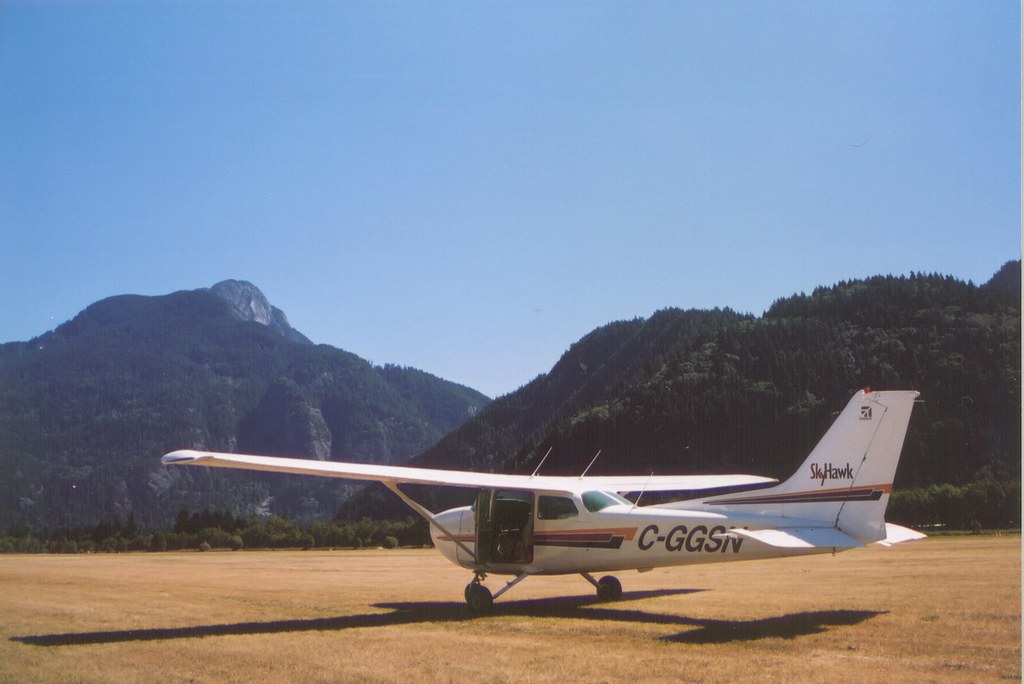
Picture the moment. You are cruising low over a flower farm outside Naivasha, your passenger leans forward and asks for a closer look at something on the ground, and your hand is already easing back on the throttle before you have consciously decided anything.
That is the moment a disproportionate share of fatal manoeuvring accidents actually begin, and the hazard that ends them is usually invisible until it is too late to matter.
The accident category hiding in plain sight
Pilots worry about engine failures and weather, and rightly so, but general aviation's own safety record tells a quieter story. The Aircraft Owners and Pilots Association's Air Safety Institute has tracked "manoeuvring" accidents, meaning low-level flight away from a planned approach or departure, as one of the two leading causes of pilot-related fatalities in general aviation across repeated editions of its Joseph T. Nall Report.
The detail that matters most is what those manoeuvring accidents actually are. The Air Safety Institute's own analysis has found that more than a third of all manoeuvring accidents are controlled flight into wires, structures, terrain, or other obstructions.
Read that sentence again slowly, because it is the whole article in one line. Not weather, not a mechanical failure, just a pilot who flew into something solid while not flying anywhere in particular.
Why a wire beats a tower every time
The FAA issued a Safety Alert for Operators on this exact hazard, SAFO 10015, "Flying in the Wire Environment", because wires are a genuinely different visual problem from every other obstacle pilots train to avoid.
A radio tower or a hill has mass, shadow, and scale, so your eye judges distance and closure rate against it reasonably well. A power line a few millimetres thick, seen end-on at any realistic range, gives your eye almost nothing to judge against, which is a large part of why that same SAFO's review of NTSB accident data found 996 reported wire-related aviation accidents and collisions over a thirteen-year period in the United States alone, with fatalities in roughly three out of every ten.
The poles or towers that carry a wire are often the only warning you get that one exists, because the wire itself can stay invisible until you are already inside its span.
The other way a low pass kills: the stall nobody sees coming
Wire strikes are not the only mechanism behind manoeuvring accidents, and the second one is purely aerodynamic. The Air Safety Institute's own safety material describes the classic low pass as a shallow nose-down descent followed by a pull-out, and that pull-out is where the real danger lives.
Pull back too aggressively to arrest the descent at low level and the angle of attack can climb past the critical angle before you register it, because you are focused on the ground rushing up rather than the airspeed bleeding off. A wing that stalls at circuit height is embarrassing and recoverable; the identical stall fifty feet above a farm track is usually fatal, because there is no altitude left to convert the recovery into flying speed again.
Both failure modes, the wire you never saw and the stall you pulled into, share one root cause. Flying lower than planned, for a reason that was not planned either, removes the margin that every other phase of flight is built around.
Kenya's low-level terrain is built for this
Fly cross-country training routes out of Wilson, Naivasha, or Nanyuki and you are rarely far from a line strung at exactly the height a careless low pass occupies.
Flower and horticulture farms across the Rift Valley run irrigation pumps and greenhouse systems off power lines that cross open fields at heights which look, from altitude, like nothing at all. Rural electricity and telephone lines follow murram roads on poles spaced widely enough that a pilot scanning for the next pole can miss the sag of the line running between it and the one behind, and mobile network masts scattered across farmland carry guy wires radiating outward that are routinely harder to see than the mast itself.
None of that is unique to Kenya, and wire strikes happen on every continent that has power infrastructure and low-flying aircraft. What is distinctly Kenyan is the combination: farmland training routes, frequent requests from passengers for a closer look at wildlife, a client's property, or a landmark, and genuinely useful low-level navigation exercises that put a trainer at exactly the height this hazard occupies, far more often than most training environments require.
The invitation that starts it
Nobody plans a wire strike or a low-level stall. Every case behind these statistics began as something else entirely: a closer look at a herd for a safari client, a photo a passenger asked for, a landmark check when a student genuinely lost confidence in their position.
This is the External pressures line in PAVE doing exactly what it is designed to flag. A request from someone else in the aircraft quietly becomes the reason your altitude changed, and the pressure rarely announces itself as pressure.
It arrives as a reasonable-sounding ask from someone paying for the flight or sitting next to you, and saying no to it out loud feels oddly harder than the manoeuvre itself would be. That gap between how small the request sounds and how large the risk actually is is the entire problem PAVE's External line exists to catch.
What Kenya's own rule actually asks of you
Kenya's Civil Aviation (Rules of the Air) Regulations, 2018, published as Legal Notice No. 124, set out a minimum-heights provision in Part II that builds on the same ICAO Annex 2 framework most states use. The core requirement over a congested area or an open-air assembly of people is not just a number to clear, it is a test: you must be high enough that an engine failure would let you land clear without undue hazard to anyone on the ground, with specific exceptions carved out only for take-off, landing, or an operation the Authority has itself approved.
The same regulations apply a distinct, stricter clearance for helicopters operating over congested areas, requiring height above the highest fixed object within a defined radius rather than relying on the land-clear test alone. The detail that matters for a fixed-wing trainer is the principle underneath both versions of the rule, not the exact figure.
Ask yourself the same question over a farm, a lakeshore, or a conservancy, congested or not. If the engine quit right now, at this height, over this specific patch of ground, could you put the aircraft down without hurting anyone or anything you did not choose to risk.
A low pass for a better photo rarely survives that test, and not only because of what an engine failure would do. The manoeuvre itself, the descent and the pull-out, is what exposes you to a wire you cannot see until you are already through it.
The reconnaissance habit that actually works
The FAA's SAFO 10015 does not tell pilots to abandon low flying altogether, because some of it, aerial work, photography, genuine low-level training, is necessary and legitimate. It tells them to treat any unfamiliar low-level area as a wire environment until proven otherwise, and to fly a high pass over the specific ground first before descending into it.
That high pass is the entire countermeasure, and it costs almost nothing. From altitude you can see poles, towers, and mast structures clearly enough to infer roughly where their wires run, and you can choose your actual low-level track to stay clear of that inferred line rather than discovering it at wire height.
A second look that still reads clean is a far better reason to descend than a first impression and a passenger's enthusiasm. If the second look raises any doubt at all, that doubt is the answer.
Instructors set what counts as normal
A student who watches their instructor fly a casual low pass over a herd of elephant for a good photo learns, instantly and without a word spoken, that this is normal professional behaviour. The lesson lands whether or not the instructor meant to teach it.
A good CFI (Certified Flight Instructor) narrates the decision instead of just making it: the high pass first, the specific line chosen to avoid, the moment a request gets declined because the ground has not actually been checked yet. That narration is the only mechanism by which a student learns to run the same check alone later, when there is no instructor in the right seat and a client is asking just as persuasively.
Schools that fly regular safari or charter familiarisation routes carry an extra duty here, because those routes repeat. A hazard spotted and briefed once on a given route should stay briefed for every pilot who flies it afterwards, not rediscovered individually by each new pilot who happens to fly low enough to find it.
What pilots admit on the forums
Low-flying threads on pilot forums follow a consistent shape. Almost nobody admits to flying into a wire, mostly because the pilots who do that rarely get the chance to post about it afterwards.
What does show up repeatedly is pilots admitting they only noticed a specific line on the second pass over a field they thought they knew well, or that they had flown past a particular stretch of farmland for years before someone finally pointed out a wire they had genuinely never registered. The confession is never framed as recklessness.
It reads closer to genuine surprise than recklessness, pilots realising a hazard existed only once they finally looked for it properly, which is precisely the gap a deliberate high pass is built to close before it costs anything.
The Short Version
- Low-level manoeuvring accidents, not weather or engine failure, rank among general aviation's two leading causes of fatal accidents, and more than a third of them are collisions with wires, structures, terrain, or other obstructions.
- Wires are a uniquely hard visual problem: thin, often unmarked, and invisible against open ground until you are already inside their span.
- The same low pass can kill a second way, through a stall on the pull-out, with no altitude left to recover.
- Kenya's farmland power lines, murram-road poles, and mobile-mast guy wires sit at exactly the height a casual low pass occupies.
- A request for a closer look, from a client, a passenger, or your own curiosity, is an External-pressures moment in PAVE, not a free manoeuvre.
- Fly a high pass over any unfamiliar ground first, and only descend if the second look still reads clean.
AngaBrief's enVironment section in the PAVE wizard asks a pilot to name specific hazards for the route and area being flown, not just the weather, precisely so a planned low-level leg gets the same conscious attention as a planned approach. The tool records that assessment in the school's audit log; it is not a dispatch authority, and the decision to fly, or to decline a low pass, always rests with the pilot in command and their instructor.
Key Takeaways
- Manoeuvring accidents, mostly collisions with wires, structures, or terrain, rank among general aviation's leading causes of fatal accidents.
- A thin wire gives your eye almost nothing to judge distance against, so a tower or pole is often your only warning that one is there.
- The pull-out from a low pass can stall the aircraft with no altitude left to recover, a second failure mode distinct from the wire itself.
- Treat any unfamiliar low-level area as a wire environment: fly a high pass first, and only descend if the second look still reads clean.
- A passenger's or client's request for a closer look is an External-pressures moment, not a free pass to change your altitude.