
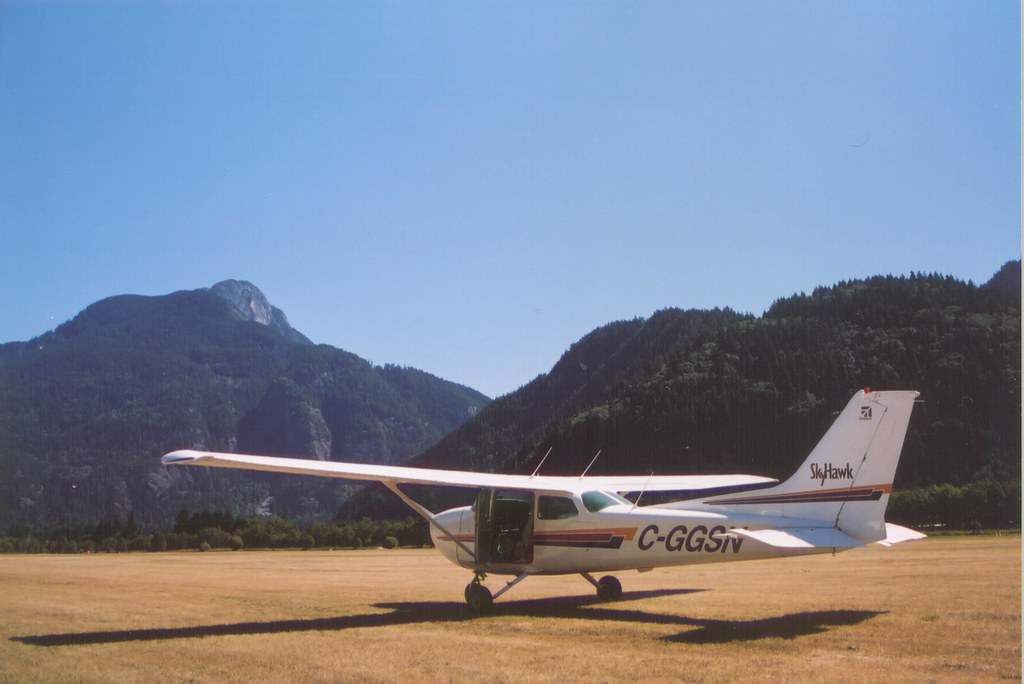
You fly a stabilised approach, the same airspeed and attitude you have flown a hundred times before. You still round out too high, or you drop in short.
Nothing about your technique changed. The runway did.
Runway width and slope illusions are not a spatial disorientation story about your inner ear. They are a straightforward optical trick your eyes play on you whenever the runway in front of you does not match the one your brain learned to expect.
Kenya hands student pilots an unusually wide range of runways to get this wrong on.
The Short Version
- A narrower-than-usual runway makes you look and feel higher than you are, and the instinct is to fly a lower approach that risks landing short or clipping an obstacle.
- A wider-than-usual runway does the opposite, making you feel low, which tempts a high, flat approach and a hard or long landing.
- An upsloping runway or upsloping terrain on the approach creates the same "you are higher than you think" illusion. A downsloping one creates the opposite.
- Kenya's licensed aerodromes run 30 to 60 metres wide. Many bush and concession strips run 15 to 20 metres, which is the exact range the illusion is documented against.
- The fix is the same every time: know the runway's dimensions before you fly it, and fly a known attitude and airspeed rather than trusting how the picture looks.
What your eyes are actually measuring
You do not consciously calculate glidepath angle on final. You compare the shape the runway makes in your windscreen against a mental template built from every runway you have landed on before.
That template is powerful and almost entirely unconscious, which is exactly why it fails silently. A runway of unfamiliar width or slope subtends a different visual angle on your retina than the runway your brain calibrated on, even when your actual height and glidepath are identical.
Your brain resolves that mismatch by adjusting its estimate of height rather than questioning the runway, because in ordinary life a strange-looking object is far more likely to mean you have moved than that the object itself changed shape. On short final, that shortcut is exactly backwards.
The FAA's Aeronautical Information Manual groups this under Illusions in Flight, separating illusions caused by the runway and terrain themselves from illusions caused by a missing or false horizon. Runway width and slope sit in the first group, and neither needs cloud, haze, or darkness to bite.
A clear afternoon with unlimited visibility is enough.
The runway width illusion
Land students at the same aerodrome for most of a syllabus and their brain calibrates hard to that one width. Change the width later and the calibration works against them.
A runway narrower than the one you trained on makes the strip appear to recede more steeply in your peripheral vision, which reads to your brain as greater height than you actually have. The documented result is a pilot who does not recognise the illusion flying a lower approach than intended, with the real risk of landing short or striking something along the approach path.
A runway wider than you are used to does the reverse. It looks closer and flatter than it is, so pilots level off high, then land hard, float, or run long.
Put real numbers on it. Wilson's licensed runway is 30 metres wide, and JKIA's is 60.
Most of Kenya's twelve KCAA-licensed aerodromes sit in that 30 to 60 metre band, built wide enough for scheduled and charter traffic as well as training aircraft. A concession strip like Kichwa Tembo in the Mara is roughly half the narrowest of those, and it is far from the only bush strip that size.
A student who solos and does most of their early cross-country work around a 30 or 45 metre runway, then flies into a 15 or 20 metre bush strip for the first time, is walking straight into the textbook version of this illusion. Nothing about their flying has degraded, their reference picture has simply changed underneath them.
The slope illusion
Slope does the same thing through a different channel. An upsloping runway, or upsloping terrain in the approach path, again creates the impression that you are higher than you actually are, and the same low-approach error follows.
A downsloping runway or downsloping approach terrain creates the opposite impression of being low. That tends to make a pilot raise the nose and add power, arriving high and touching down long, sometimes well past the intended touchdown point.
Kenya's terrain makes slope common rather than exceptional. Highland strips built into ground that was never bulldozed flat, and bush airstrips graded along the natural contour for drainage rather than levelled, both carry measurable gradient as a matter of course.
Some of this ground has to be flown uphill in one direction and downhill in the other by design, not by accident, because the terrain around it leaves no better option.
Stack width and slope together, a narrow strip that also slopes upward toward the far end, and the two illusions reinforce each other instead of cancelling out. That combination is not a rare edge case in Kenyan bush flying, it is closer to typical.
Why the licensed and unlicensed split makes this worse
Kenya's twelve KCAA-licensed aerodromes and roughly twenty-eight non-KCAA private and concession airstrips are not just a regulatory distinction. They are two different visual environments.
A licensed aerodrome built to accommodate commercial traffic is far more likely to carry a Visual Approach Slope Indicator (VASI) or a Precision Approach Path Indicator (PAPI), the coloured light systems that give an independent, illusion-proof glidepath reference regardless of what the runway itself looks like. A grass, murram, or gravel bush strip with no terminal building and no scheduled service has no such infrastructure, by definition.
That means the illusion is strongest exactly where the correction is weakest. Where the width is least familiar and a slope is most likely, at the unlicensed strip, the electronic backstop that would normally catch the error simply is not there.
That is the real shape of the risk in Kenya, and it does not spread evenly across a training syllabus. It concentrates precisely where a student or low-time pilot is least likely to have a second reference to check against.
Finding the numbers before you fly
None of this requires guessing. Kenya's licensed aerodromes have their runway data published through the KCAA Aeronautical Information Publication, and it is exactly the kind of figure worth reading before departure rather than discovering on short final.
Unlicensed bush and concession strips do not appear in the same publication, so the discipline shifts. Safari operators running scheduled strips like those in the Mara maintain their own strip plates, and calling ahead by radio to confirm current length, width, surface, and slope is standard practice, not an optional extra.
Treat a strip you have never landed on the way you would treat a NOTAM you have not read yet: assume there is something important in it, and go find it rather than discovering it on the roll-out.
What actually protects you
The FAA's guidance here is unglamorous, which is usually a sign it works. Know the runway before you fly it, and do not trust the picture alone.
- Brief the dimensions, not just the name. Length, width, and slope where it is known, before you commit to an unfamiliar aerodrome or strip.
- Fly a known attitude and airspeed, not a known picture. Your airspeed indicator and attitude do not change because the runway looks different, so trust the instrument over the impression every time the two disagree.
- Use VASI or PAPI whenever it exists. Where a licensed aerodrome gives you one, it is a free, illusion-immune cross-check, and it is worth using even on a runway you already know well.
- Fly a stabilised approach criterion, not a feel. On speed, on a sensible descent rate, at a sensible height by a given distance out, catches an illusion-driven error before it becomes a landing error.
- Overfly an unfamiliar strip first. A circuit-height pass to actually look at width, slope, and surface before your approach turns an illusion into information instead of a surprise.
What instructors should actually brief
Most Kenyan flight training happens at one or two aerodromes for the bulk of the early syllabus. That means most students build their reference picture around a single width and a mostly flat runway, and nobody tests that assumption until it fails.
The fix is not more solo hours at the home aerodrome. It is naming the illusion explicitly before the first flight to a different strip, not after a hard arrival makes the point the expensive way.
A CFI (Certified Flight Instructor) who briefs that a strip is half the width of the one a student trained on, and tells them plainly to expect the ground to look wrong and to trust the airspeed indicator instead, has done more for that student's next landing than another circuit at the home field would. It costs two minutes on the ground and it is the entire fix.
What pilots describe on the forums
The pattern on pilot forums is consistent and rarely dramatic. Someone describes a landing at an unfamiliar strip that felt subtly wrong the whole way down, an approach that looked fine and then needed a late correction they cannot fully explain.
The story that repeats most often is the transition one: solid, consistent landings at the home aerodrome, then a rough arrival the first time at a narrower or sloped strip. The realisation, usually written after the fact rather than during, is that the runway had changed and their eyes had not caught up.
Very few describe it as a near miss. Most describe it as the landing that taught them to stop trusting the picture and start trusting the numbers, which is the same lesson the FAA's own material is built to teach before the runway has to teach it directly.
AngaBrief's assessment wizard records the departure and arrival aerodrome for every flight, including the pre-populated runway width and surface a student never has to key in by hand. That data exists to prompt exactly this kind of check before departure, and nothing more.
The disclaimer holds regardless of how good the data is: AngaBrief is not a dispatch authority, and the go/no-go decision, along with the approach a pilot actually flies, rests with the pilot in command and their instructor.
Key Takeaways
- A runway narrower or steeper uphill than the one you trained on will make you feel higher than you are, and will pull you toward a low approach if you fly by eye alone.
- A wider or downsloping runway does the opposite, tempting a high, flat approach and a long or hard landing.
- Kenya's runway widths span roughly 15 to 60 metres across licensed and unlicensed strips, precisely the range the illusion is documented against.
- PAPI and VASI, where they exist, are illusion-proof, and they exist mainly at licensed aerodromes, not at the bush strips where the illusion is strongest.
- Brief the runway's dimensions before you fly it, and fly a known airspeed and attitude rather than trusting how the runway looks.