
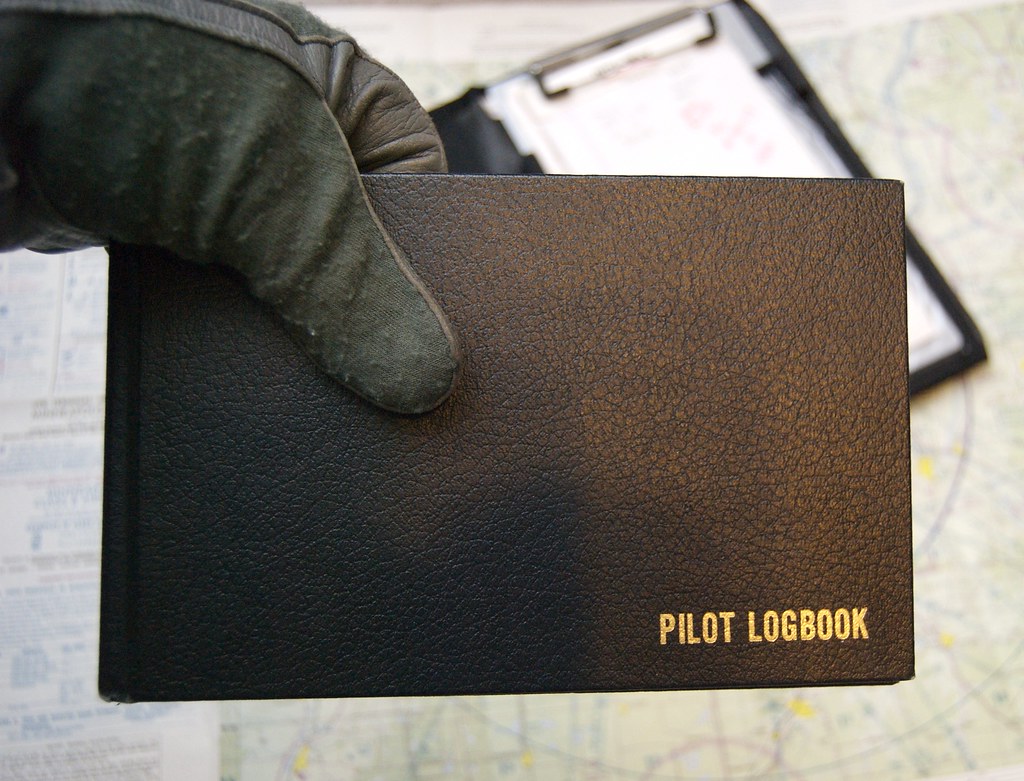
Every pilot remembers their skill test date long after they forget which aircraft registration they flew it in. It is the one day in training where a stranger, not your regular instructor, decides whether the last year of dawn lessons and bank transfers was enough.
Talk to candidates at any Kenyan flying school in the week before their test and you hear one word before anything else: nerves. That word is doing more work than it should, and it is worth taking apart properly.
What the KCAA skill test is actually testing
The Kenya Civil Aviation Authority runs its skill tests against a published standard, not examiner preference. CAA-AC-PEL-009, Skill Test Standards for Flight Crew Licence Issuance, sets out what counts as an adequate skill level for PPL, CPL and ATPL issuance.
Flight instructors are expected to use that same document while preparing a candidate, not just the examiner on the day. The test a candidate sits is not a mystery the examiner invents on the spot, it is a public standard your CFI (Certified Flight Instructor) already has in front of them.
Ground before flight, always
KCAA's standard fixes the order of the test: the ground portion is completed before the flight portion begins. That sequencing is not incidental.
It means an examiner has already assessed your planning, your systems knowledge and your decision-making on paper before a single checklist item is run in the aircraft. A weak ground session colours the whole day before you have even walked to the ramp.
The knowledge test has to come first, and stay valid
KCAA's Personnel Licensing Regulations require the written knowledge test to be passed before the skill test is conducted, a requirement set out under Regulation 28 of the Personnel Licensing Regulations. Both the knowledge result and the skill test itself then have to stay within their validity windows under the same regulations.
A candidate who delays after passing the knowledge test can find it has lapsed before the skill test is even booked. That is a paperwork failure, not a flying one, and it is entirely avoidable with a calendar.
Why failing it costs more in Kenya than the retest fee
A failed skill test is expensive everywhere. In Kenya it is expensive in a way that compounds, because most candidates are self-funding and training costs are already a known barrier to entry.
Kenya's regulator has said directly that high training costs are keeping Kenyans out of the cockpit. Business Daily reported the Kenya Civil Aviation Authority's own director-general describing flying schools as largely empty because of high fees, even as the country faces a shortage of commercial pilots to meet demand (Business Daily).
The scale of the drop is stark. Business Daily reported that newly licensed pilots fell from 456 in one financial year to 167 the next, a collapse the regulator tied to the pandemic and the cost of training (Business Daily).
Those figures are a few years old now, but the underlying economics, a self-funded student paying per flying hour, have not changed.
Against that backdrop, a retest is not simply another fee. It is hours more flying you have already budgeted precisely once, an aircraft slot you have to re-book around a school's limited fleet, and, for students training away from where the examiner is based, travel costs stacked on top.
Treating the skill test casually is a luxury Kenyan candidates mostly do not have.
What the fear actually does, and what it does not do
Here is where it gets interesting, because the research on test anxiety and flying performance is thinner, and more surprising, than the folklore around it. A Massey University thesis that measured state and trait anxiety in student pilots across training and flight tests confirmed that anxiety is real and detectable in candidates (de Montalk, 2000).
It did not, however, find a measurable link between that anxiety and either flight test scores or hours taken to reach first solo.
That is a genuinely uncomfortable finding for anyone who wants nerves to be the clean explanation for a disappointing result. It suggests that feeling anxious and performing badly are two separate things that often travel together without one causing the other.
Two other peer-reviewed studies in the Collegiate Aviation Review International point the same way. Clarke, Bliss and Depperschmidt (2024) found that checkrides and practical tests are a leading reported source of depression, anxiety and stress among collegiate flight students, alongside financial strain, and a separate study at Southern Illinois University Carbondale by Robertson and Ruiz found checkrides rank as the single most stressful part of flight training, ahead of cost (Clarke et al., 2024; Robertson and Ruiz).
A third study surveying 231 students across five US flight programmes found that 43.7 percent met criteria for at least mild anxiety, and that more than half were reluctant to seek support because of worries about how it might affect their aviation medical certificate (Pan and Mendonca).
Put these findings together and a sharper picture appears. Evaluation anxiety before a skill test is common and real, and it is a legitimate thing to manage.
What the evidence does not support is using it as the automatic explanation when a candidate fails, because the data has not reliably shown that nerves alone move the outcome.
What actually fails candidates
Examiners who write about their own checkrides describe a narrower, more specific set of problems than generalised fright. A recurring one is tunnel vision, where pressure narrows a candidate's attention so sharply that an otherwise competent pilot misses a step they would never skip on an ordinary lesson.
Designated examiners in the United States, writing for AOPA, describe a related pattern: candidates who spike their own stress levels through behaviour that has nothing to do with flying skill, second-guessing every instruction, narrating anxiety out loud, or apologising pre-emptively for mistakes they have not yet made. One examiner put it bluntly: consistently exceeding an aircraft's operating limitations is what actually worries an examiner, not a nervous voice on the radio (AOPA).
That distinction matters for how you prepare. Breathing exercises help you feel calmer, but they do not fix a shaky understanding of weight and balance limits, and an examiner is grading the limits, not your composure.
How examiners try to keep the day fair
It is also worth knowing that a well-run test is not designed to catch you out. Examiner guidance in the United States explicitly describes training examiners to build a relaxed testing environment precisely because anxiety-driven mistakes are a known risk to a fair assessment, not a desired outcome (AOPA).
Part of what drives unnecessary fear is simply not knowing the examiner or the exact shape of the day. Where candidates can meet their examiner, or at least understand the standard being used, ahead of the test, some of that fear of the unknown disappears before the day even starts (AOPA).
Preparing properly, not just calming down
If the honest research says nerves are common but not reliably decisive, the useful response is not a breathing app. It is closing the actual gaps the test will probe.
- Run a mock test with a different instructor. Your regular CFI knows your habits too well to catch everything a stranger will probe on the day.
- Know the sequence before you arrive. The ground portion comes first under KCAA's own standard, so treat your flight planning and oral knowledge as the part that sets the tone for the flight that follows, not a formality to get through.
- Budget for a possible retake before the test, not after. Given how training costs already strain Kenyan students, deciding in advance how a failed item would be funded and rescheduled removes one source of panic from the day itself.
- Separate the feeling from the fact. Feeling nervous is normal and, on the evidence, not strongly tied to your result. A gap in your weight and balance calculations or your emergency procedures is tied to your result, so spend your preparation time there.
What instructors owe a candidate before test day
KCAA's own standard expects instructors to prepare candidates against the same CAA-AC-PEL-009 document the examiner will use, which means a good CFI (Certified Flight Instructor) is not guessing at what the test covers either. The honest version of readiness-checking is an instructor telling a financially stretched student the truth about whether they are ready, even when the student, and sometimes the school's cash flow, wants a yes.
Given what Kenyan training actually costs, sending a candidate to a skill test they are not ready for is not kindness. It is a more expensive and more discouraging way of saying no.
What pilots admit about their own skill test
Pilot forums have a familiar shape whenever a skill test thread comes up. Almost nobody admits to sailing through calm and unbothered, and almost everybody admits to a moment of blank panic somewhere in the flight portion that they recovered from without the examiner needing to intervene.
The admissions that repeat most are not dramatic. A missed radio call corrected on the second attempt, a go-around flown slightly scrappily but safely, a diversion calculation redone out loud under the examiner's eye.
The common thread is recovery, not perfection, which lines up with what the research above actually found: the nerves were there, and they were not what decided the outcome.
The Short Version
- KCAA's skill test runs against a published standard, CAA-AC-PEL-009, that your instructor already uses to prepare you, with the ground portion always completed before the flight portion.
- The written knowledge test must be passed first under Regulation 28, and both results carry validity windows worth tracking on a calendar.
- Kenya's training economics make a retest costly in a way that compounds on top of an already expensive licence, which is reason enough to prepare properly rather than hope nerves settle on the day.
- Peer-reviewed research has found test anxiety is real and measurable in student pilots, but has not reliably linked it to worse flight test scores, so treating nerves as the automatic excuse for a failure is not supported by the evidence.
- What examiners actually report failing candidates on is specific: exceeded limitations, tunnel vision under pressure, and skill gaps, not a nervous voice on the radio.
AngaBrief's pre-flight risk assessment exists for the lessons that come before test day, not the test itself, and it is not a dispatch authority on either. The go or no-go call, on test day and every day before it, stays with the pilot in command and their instructor.
Key Takeaways
- KCAA's skill test standard is a public document your instructor already uses, so the test is not a mystery to prepare against.
- The knowledge test must be valid and passed before the skill test, and the ground portion always comes before the flight portion.
- A retest in Kenya is expensive enough to budget for in advance, not panic about afterwards.
- The evidence does not reliably link nervousness to a worse result, so fix specific skill gaps rather than treating calm as the main goal.