
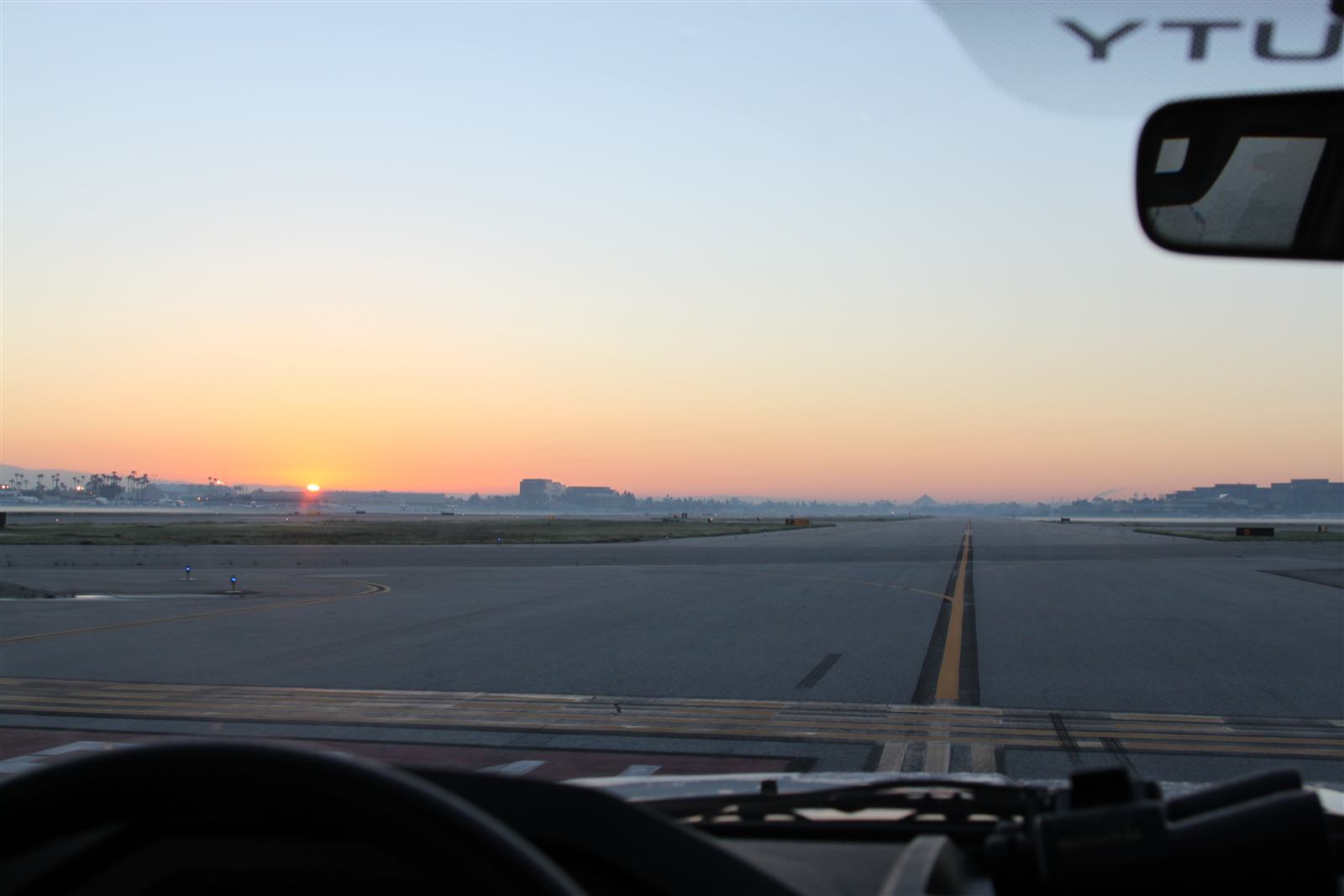
On the morning of 5 March 2024, a Cessna 172M was on its third touch and go on runway 07 at Wilson Airport. A Safarilink Dash 8 had just been cleared for takeoff on runway 14, the runway that physically crosses runway 07.
Sixteen seconds after the Dash 8 began its takeoff roll, the two aircraft occupied the same airspace over Nairobi National Park. The Cessna did not survive the encounter.
The Short Version
- On 5 March 2024, a 99 Flying School Cessna 172M (5Y-NNJ) on training circuits collided in mid-air with a Safarilink Dash 8 (5Y-SLK) that had just departed Wilson Airport, according to Kenya's official preliminary accident report.
- Both occupants of the Cessna, a flight instructor and a student, were killed. The Dash 8, carrying 39 passengers and five crew, landed back at Wilson with no injuries.
- Runway 07, where the Cessna was flying circuits, physically crosses runway 14, from which the Dash 8 departed. The tower had told the Dash 8 crew to look out for the Cessna before clearing them for takeoff.
- A takeoff clearance, and even an instruction to look out for traffic, is not a guarantee of separation. Under both ICAO Annex 2 and plain airmanship, the pilot in command still owns collision avoidance in visual conditions.
- Kenyan press reporting puts the number of major accidents or serious incidents at Wilson at nine or more since March 2024, prompting tighter oversight of the airport's traffic management.
What the report says happened
Kenya's Aircraft Accident Investigation Department, under the Ministry of Roads and Transport, published a preliminary report into the collision. At around 0634 local time, the Cessna 172M, operated by 99 Flying School with a flight instructor and a student aboard, was flying touch-and-go circuits on runway 07.
Wilson's tower cleared Safarilink flight 053, a Dash 8-315Q with 39 passengers and five crew, for takeoff on runway 14 and told the crew to look out for the Cessna operating upwind of runway 07. Runway 14 crosses runway 07 on the ground, and the two tracks cross again in the air as each aircraft climbs out and turns.
About sixteen seconds after the Dash 8 began rolling, the two aircraft came together over Nairobi National Park, roughly two kilometres from the airport. The Cessna broke up and came down in the park, killing both occupants.
The Dash 8 lost sections of the de-icing boot from its right wing and right horizontal stabiliser, later found near the Cessna wreckage, and returned to Wilson without further incident. The report notes the weather that morning was suitable for visual flight and was not considered a factor.
This was a preliminary report, not a final one. It set out the sequence of events and the physical evidence, and it stopped short of assigning a probable cause, which is still normal practice at this stage of a serious accident investigation.
Treat everything below as drawn from what is established, not from speculation about what the final report will eventually conclude.
Why two intersecting runways are a structural risk, not a one-off
Wilson's runway 07/25 and runway 14/32 cross each other. Any aerodrome with intersecting runways in simultaneous use has a geometry problem that no clearance, however carefully worded, removes.
Both runways can be legitimately active at once if traffic is sequenced correctly. The moment one aircraft is told to hold or look out rather than simply to stop, the separation has shifted from "guaranteed by procedure" to "dependent on someone seeing someone else in time." That shift is the entire story of this accident.
Kenyan students training at Wilson fly this exact geometry every day, usually without registering it as a hazard. A circuit on runway 07 and a departure on runway 14 are routine, unremarkable, and have worked thousands of times.
The hazard is precisely that routine success teaches pilots to stop treating the crossing point as a live threat.
A takeoff clearance is not a collision-free guarantee
Ask most students what "cleared for takeoff" means and they will say it means the runway, and the airspace above it, is theirs. That is not what the clearance actually promises.
SKYbrary's summary of ATC clearance principles states it plainly: a clearance does not relieve a pilot in command of responsibility in connection with a possible violation of applicable rules. Air traffic control issuing a clearance does not amount to a guarantee of separation from traffic the controller has told you about but not separated you from.
The tower at Wilson did exactly what procedure asked of it. It cleared the Dash 8 and explicitly flagged the Cessna's position.
From that point, the task of actually acquiring that Cessna visually and maintaining separation from it sat with the Dash 8 crew, under the universal principle that "see and avoid" governs visual flight whenever weather permits, precisely because other traffic may be operating in the same airspace without ATC holding it at arm's length from you. ICAO Annex 2 states the same idea from the other direction: nothing in the rules of the air relieves the pilot in command of the responsibility to take whatever action, including collision avoidance, the situation demands.
None of this is a criticism specific to the Dash 8 crew, about whom the preliminary report says little beyond the sequence of events. It is the structural point every pilot flying in and out of Wilson needs to internalise: being told about traffic is not the same as being protected from it.
The scan that actually catches traffic in sixteen seconds
Sixteen seconds is not much time to acquire a target, assess its closure rate, and manoeuvre. It is enough time, if the scan is already running and disciplined, which is exactly what most pilots' scans are not.
The FAA's AC 90-48E, Pilots' Role in Collision Avoidance, lays out what an effective scan actually requires, and it is more deliberate than most pilots assume:
- Short, regularly spaced eye movements, each covering no more than about 10 degrees of sky, with each segment held for roughly a second so the eye can actually focus and detect motion.
- A continuous horizontal sweep does not work. The eye needs to stop and look, not glide past.
- High-wing aircraft lose visibility above the aircraft. Low-wing aircraft lose visibility below. A low-wing aircraft climbing above a high-wing aircraft is the advisory circular's own worst-case combination, and it describes almost exactly the geometry of a departing Dash 8 climbing through the circuit height of a Cessna on runway 07.
- Pitch attitude in the climb, and shallow clearing turns before a turn or a level-off, exist specifically to move the aircraft's blind spots out of the way long enough to look through them.
A departing crew briefed on specific traffic has a head start the AC does not assume everyone has. That head start is wasted if the scan that follows is the same unfocused glance a pilot gives the sky on an unremarkable day.
What this means if you train or instruct at Wilson
If you fly circuits on runway 07 while runway 14 is active, or depart runway 14 while circuits are running on runway 07, the crossing point is not background noise. It is the single highest-workload moment of that flight, every time, regardless of how many times it has gone smoothly before.
For students: a tower report of traffic is information, not insurance. Acquire the aircraft visually before you accept that the airspace ahead is clear, and say so on the radio if you have not.
For instructors: a CFI (Certified Flight Instructor) running circuits at a crossing-runway aerodrome is teaching scan discipline every single circuit, whether or not that is the stated lesson objective. Narrate it.
Point at the intersecting runway on the downwind leg and ask the student where the next conflict could come from, before it does.
Make the radio call precise about what you have actually done, not what you have been told. "Looking" and "traffic in sight" are different states, and only the second one means you can rely on your own eyes rather than someone else's assumption that you will find the aircraft in time. If the tower has named traffic and you have not visually acquired it by the point where your paths could cross, say so, and ask for an update rather than proceeding on the strength of the original call.
This is not a Wilson-only lesson either. Any Kenyan aerodrome running simultaneous operations on runways that physically cross carries the same structural risk, including several of the busier upcountry strips during peak training hours.
The specific geometry changes from field to field. The underlying rule, that a verbal warning is not a substitute for your own scan, does not.
Wilson since March 2024: a pattern, not a one-off
This accident did not happen in isolation. Kenyan press reporting, drawing on Kenya Civil Aviation Authority and Ministry of Transport material, has documented at least nine major accidents or serious incidents at Wilson since March 2024, including further near misses and hard landings, prompting tighter oversight of the airlines, maintenance organisations, and flying schools that operate from the field, alongside infrastructure works intended to modernise the airport.
None of that retroactively explains this specific accident, and the final AAID report, once published, remains the authoritative word on probable cause. What it does establish is that the pressure a busy, mixed-traffic aerodrome puts on crossing-runway operations is not a one-time coincidence.
It is a standing condition of flying from Wilson that every operator there, training schools included, has to manage actively rather than assume away.
What pilots say about crossing runways when nobody is grading them
Pilot forum threads about intersecting-runway operations have a recognisable shape, and it rarely involves anyone admitting they got complacent in the moment. Instead the admissions come afterwards, framed as a close call rather than a mistake.
The recurring pattern is a pilot who had been told about traffic, accepted the clearance, and then realised partway through the manoeuvre that they had never actually put eyes on the aircraft they had been warned about. Most of those threads end the same way every time, with the aircraft never actually meeting, and the poster treating that as the end of the story rather than as a warning that the gap between "informed" and "visually acquired" is where these events live.
That gap is not a Wilson problem specifically, and it is not a Kenya problem specifically. It is the gap this accident fell into, and it is the same gap waiting at every aerodrome where two runways cross.
AngaBrief's pre-flight workflow asks pilots to record environment factors like active-runway configuration explicitly, partly so that a crossing-runway day gets flagged rather than absorbed into routine. The tool can surface the question, nothing more.
It is not a dispatch authority, and the decision to accept a clearance, or to hold until a target is actually in sight, stays with the pilot in command and their instructor, always.
Key Takeaways
- A takeoff clearance, even one that names specific traffic, is information and sequencing, not a guarantee of separation.
- Intersecting runways in simultaneous use put the entire burden of the final few seconds of separation on an effective visual scan.
- An effective scan is short, stopped, regularly spaced segments of about 10 degrees held for roughly a second each, not a continuous sweep.
- A low-wing aircraft climbing above a high-wing aircraft is the hardest blind-spot combination there is. Know when you are flying it.
- Being told about traffic is the start of collision avoidance, not the end of it. Acquire it visually before you believe it is clear.