
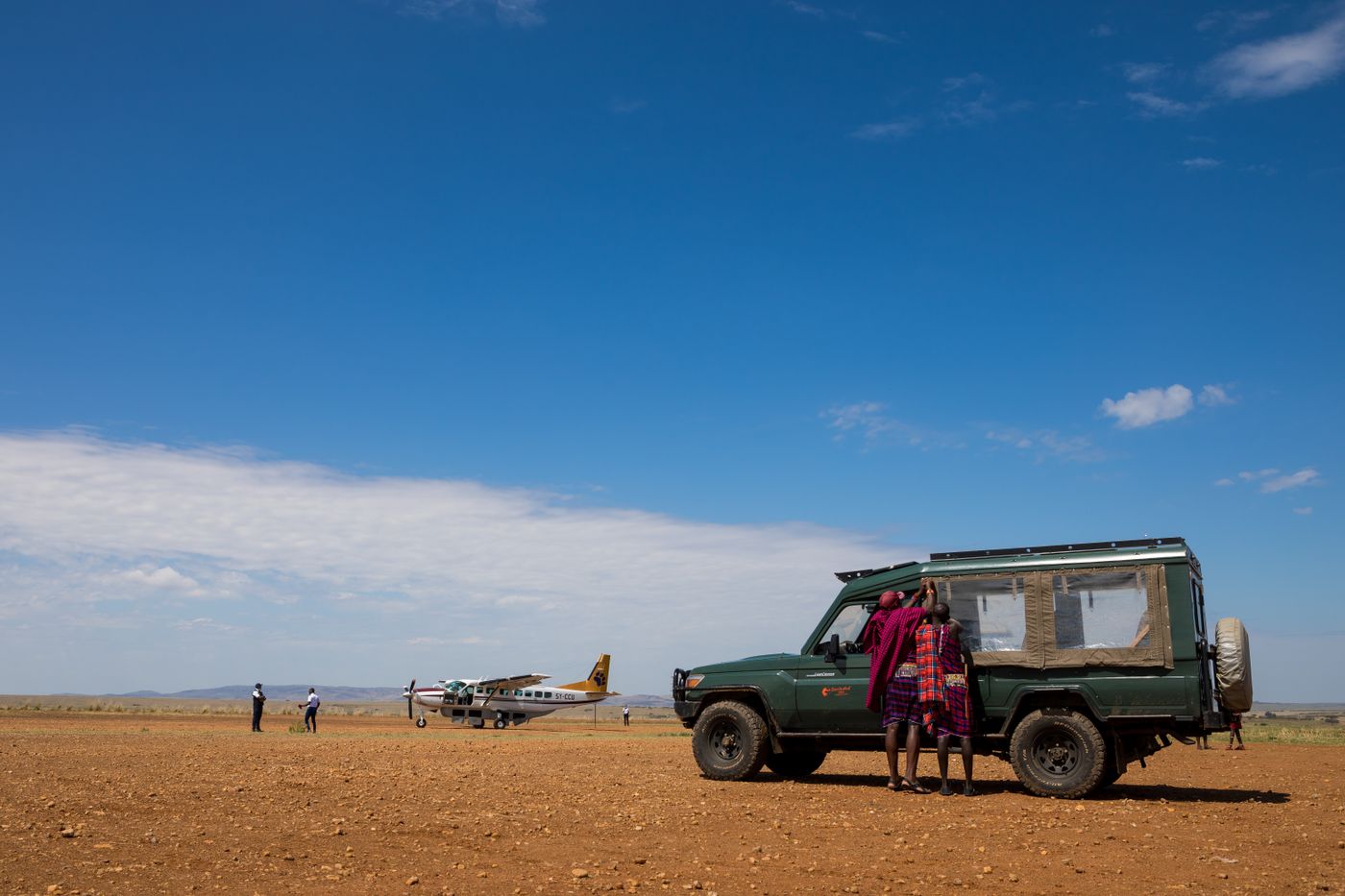
Picture a humid morning at Wilson. You are downwind in a Cessna 172, number two behind a Cessna 208 Caravan that has just been cleared to land ahead of you.
The Caravan is a single-engine aeroplane, not a jet, and it does not look threatening. It also weighs roughly three times what your 172 does, and every kilogram of that weight is being paid for with two ropes of spinning air trailing off its wingtips.
You cannot see them. That is the entire problem, and it is why wake turbulence has rolled light aircraft past the limit of their aileron authority close to the ground, where there is no height left to recover.
This article is about the invisible gap behind a heavier aircraft. Where the wake goes, how it sinks and drifts, and the specific timing and geometry that keeps you out of it on takeoff, on landing, and in the circuit.
The Short Version
- Wake turbulence is not propwash or jet blast. It is a pair of counter-rotating wingtip vortices, and they are strongest behind an aircraft that is heavy, clean and slow.
- To ICAO's wake turbulence categories, a Cessna 172, a Caravan and a King Air 350 are all "Light" (7,000 kg or less), so the category system prescribes no separation between them.
- At altitude the vortices sink 300 to 500 feet per minute and level off 500 to 900 feet below the generating aircraft's flight path, per the FAA Aeronautical Information Manual.
- Near the ground a light crosswind of 3 to 5 knots can hold the upwind vortex over the runway instead of blowing it clear.
- The fixes are geometric: on takeoff, rotate before the heavier aircraft's rotation point and stay upwind; on landing, stay at or above its path and land beyond its touchdown point.
What is actually trailing off those wingtips
Wake turbulence is the aerodynamic price of lift. A wing makes lift by holding higher pressure underneath it than above it, and at each wingtip that pressure difference has somewhere to go.
Air spills around the tip from the high-pressure lower surface to the low-pressure upper surface, and the aircraft's forward motion stretches that spill into a tight, fast-spinning tube of air. One trails off each wingtip, and the two spin in opposite directions.
Between the pair, the air is moving downward. That is the part that matters to you, because a following aircraft that flies into a core meets a rolling flow that can exceed the roll authority of its ailerons.
The strength of the vortices tracks how hard the wing is working. The FAA reduces it to three words worth memorising: the worst wake comes from an aircraft that is heavy, clean and slow.
Heavy, because a greater weight needs a greater pressure difference to hold it up. Clean, because retracted flaps concentrate the vortex into a tighter, more violent core. Slow, because a wing at high angle of attack, on rotation or over the threshold, is loading its tips hardest of all.
Read that list against a Caravan climbing out of Wilson at full load on a hot day. It is heavy for its class and slow in the initial climb, and as it retracts flap and cleans up, the vortices tighten rather than fade.
To ICAO, your 172 and that Caravan are the same category
Here is the fact that catches people out. Kenya, like every ICAO contracting state, sorts aircraft into wake turbulence categories by maximum certificated take-off mass.
The bands are wide. Heavy is 136,000 kg or more, Medium is above 7,000 kg and below 136,000 kg, and Light is 7,000 kg or less.
A Cessna 172 has a maximum take-off mass a little over 1,100 kg. A Grand Caravan sits near 3,970 kg, and a King Air 350 tops out around 6,800 kg.
All three are Light. To the category system, the Caravan that outweighs your trainer three to one, and the King Air that outweighs it roughly six to one, are filed under the same single letter you are.
That matters because the separation minima are built on category steps. A Light aircraft following a Heavy is given 6 nautical miles, and a Light following a Medium is given 5. A Light following another Light gets no wake turbulence minimum at all.
So when Wilson tower sequences your 172 behind a Caravan, no rule requires a wake turbulence gap, because on paper there is no category step to protect. The physics did not read the paperwork.
This is the single most important idea in the article. At a mixed-traffic strip like Wilson, the formal category system will not build your buffer for you, so you have to understand the wake and build it yourself.
Where the wake goes after it leaves the wing
Vortices do not hang in the air where they were made. They move, and knowing how they move is what lets you tell the empty air from the loaded air.
First, they sink. Away from the ground the pair descends together at 300 to 500 feet per minute and tends to level off 500 to 900 feet below the flight path of the aircraft that made it, according to the FAA Aeronautical Information Manual.
That sink is why staying at or above a heavier aircraft's path keeps you clear, and why descending into the slot it just vacated does not. The dangerous air is below the leader, not on its track.
Second, they drift. The whole pattern moves with the air mass, so in a crosswind the wake washes downwind across the ground at roughly the wind speed.
Near the runway that becomes a trap. A light crosswind of about 3 to 5 knots can hold the upwind vortex stationary over the touchdown zone while blowing the downwind one toward a parallel runway or taxiway.
Read that carefully, because it inverts a common assumption. A gentle crosswind does not always clear the runway of wake; sometimes it parks the most dangerous vortex exactly where you are about to land.
Close to the ground the vortices also stop sinking and begin to spread outward, moving laterally at a few knots once they are within about a wingspan of the surface. In a dead calm they sit and spread, and in a light wind they drift as a set.
Taking off behind something heavier
On takeoff the leader starts making wake at the point where it rotates and lifts off, not at the start of its roll. Before rotation the wing is not yet carrying the aircraft's weight, so there is little to trail.
That single fact gives you your departure plan. If a Caravan rotated 900 metres down the runway, the clean air is the runway behind that point, and the loaded air is the climb path ahead of and below where it left the ground.
So when you are cleared to depart behind a heavier aircraft, plan to be airborne before the point where it rotated, and turn slightly upwind of its track as you climb. Rotate early, climb above its path, and stay on the windward side.
If you cannot out-climb or out-position it, buy time instead. ICAO's own time-based separation for a Light departing behind a Medium or a Heavy is two minutes, and although no rule imposes that behind another Light, two minutes is a sound self-imposed figure when you are following a heavy Caravan or a King Air off the same runway.
Ask the tower for it plainly. "Request a wake turbulence interval" is a normal, professional call, and no controller will think less of a student who makes it.
Landing behind something heavier
Landing is the mirror image, and the geometry flips with it. The leader stops making wake at its touchdown point, because that is where its wing stops flying.
So on approach behind a heavier aircraft, the clean air is the runway beyond its touchdown point, and the loaded air is the approach path short of it, sinking below the glidepath it flew.
Your defence is to stay at or above the heavier aircraft's approach path and to put your wheels down beyond the point where its wheels touched. Note where it crosses the threshold, note where it touches, and fly a slightly higher slot to land long of that mark.
This runs against a student's instinct to grease it onto the numbers. On a normal approach that is good discipline, but behind a Caravan on a still morning, the numbers can be the one stretch of runway you most want to avoid.
If the approach cannot be flown that way, the answer again is time or a go-around. A wider circuit, a slower extension of downwind, or a positive decision to go around and re-sequence all beat flying an approach through settling wake close to the ground.
The Wilson circuit is a wake-management exercise
Wilson is one of the busiest general aviation airports in Africa, and its circuit mixes exactly the traffic that makes wake matter. Light trainers share the pattern with Caravans on safari rotations, King Airs, and helicopters, often within a couple of aircraft of each other.
Because none of that traffic triggers a wake separation minimum against your Light trainer, your situational awareness is doing the job a radar separation standard would do elsewhere. That starts with knowing who is ahead of you and what they weigh.
Listen to the sequence on the tower frequency and build the picture: the type ahead, where it will rotate or touch down, and which way the wind will carry its wake. The same phraseology discipline that keeps the circuit orderly is what lets you track the aircraft whose wake you need to respect.
Helicopters deserve their own line. A helicopter in forward flight trails vortices much like a fixed wing, and its downwash in the hover is powerful, so the FAA advises staying at least three rotor diameters clear of a hovering helicopter and treating one in forward flight as a wake producer in its own right.
Put it together and the Wilson circuit is not just a traffic pattern. It is a running exercise in predicting where invisible air has gone and keeping your aeroplane out of it.
Frequently asked questions
Is a Cessna Caravan really a wake turbulence threat to a C172? It is only a single-engine aeroplane.
Yes. Wake strength tracks weight and wing loading, not engine count, and a Grand Caravan at roughly 3,970 kg outweighs a 172 about three to one. That is more than enough to produce vortices a light trainer must respect.
Will Wilson tower give me wake separation behind a Caravan or a King Air?
Not automatically. Your 172, the Caravan and the King Air are all in ICAO's Light category, so no wake turbulence separation minimum applies between them. If you want an interval, ask for it, and manage your own spacing and geometry.
Does a crosswind clear the runway of wake?
Not reliably. A crosswind of about 3 to 5 knots can hold the upwind vortex over the touchdown zone rather than removing it, so a light wind can leave the most dangerous vortex sitting exactly where you intend to land.
What is the simplest rule for landing behind a heavier aircraft?
Stay at or above its approach path and land beyond the point where it touched down. Its wake sinks below the path it flew and ends at its touchdown point, so a higher slot and a longer landing keep you in clean air.
Key Takeaways
- Wake turbulence is a pair of counter-rotating wingtip vortices, strongest behind an aircraft that is heavy, clean and slow.
- A C172, a Caravan and a King Air 350 are all ICAO "Light" (7,000 kg or less), so no wake separation minimum applies between them at a strip like Wilson.
- Vortices sink 300 to 500 feet per minute to 500 to 900 feet below the flight path, and they drift with the wind. A 3 to 5 knot crosswind can hold one over the runway.
- On takeoff, rotate before the heavier aircraft's rotation point and climb upwind of its track. On landing, stay at or above its path and land beyond its touchdown point.
- When geometry will not build the buffer, buy time. A two-minute interval or a go-around beats an approach through settling wake.
Wake turbulence is a planning problem before it is a stick-and-rudder problem, and most of the planning happens before you ever start the engine. Which types are flying today, what the wind is doing, and where you sit in the sequence. AngaBrief's pre-flight assessment is built to make that kind of risk visible while it is still cheap to act on, by prompting you to think through the traffic and the conditions rather than discovering them on short final.
It records and structures that thinking. It does not fly the approach and it does not make the call. The go or no-go, and the decision to go around, stay with the Pilot in Command and the instructor.