
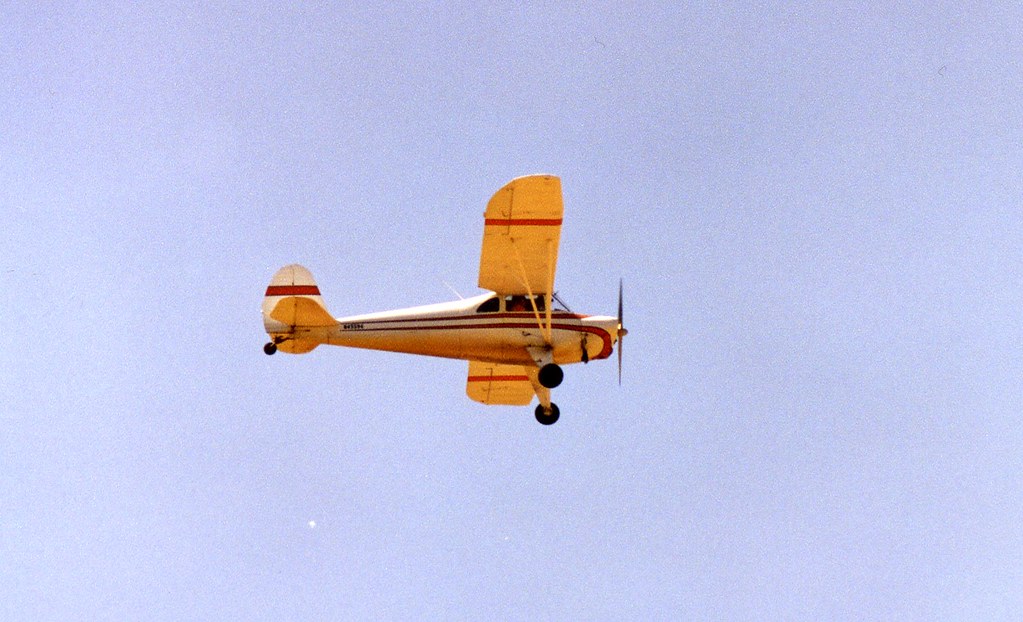
Crosswind landings are the exercise that separates students who have accumulated hours from students who have developed skills. The difference is visible in their consistency: a student who has practised crosswind landings mostly by repetition will perform them acceptably in familiar conditions and struggle in unfamiliar ones. A student who has been taught through a systematic progression understands what they are trying to achieve at each phase and can adapt technique to varying crosswind strengths and surface types.
This article describes a teaching progression for crosswind landings that produces the latter: students with an understanding of the technique that survives changing conditions, including the murram strips and variable winds of Kenya's diverse aerodrome network.
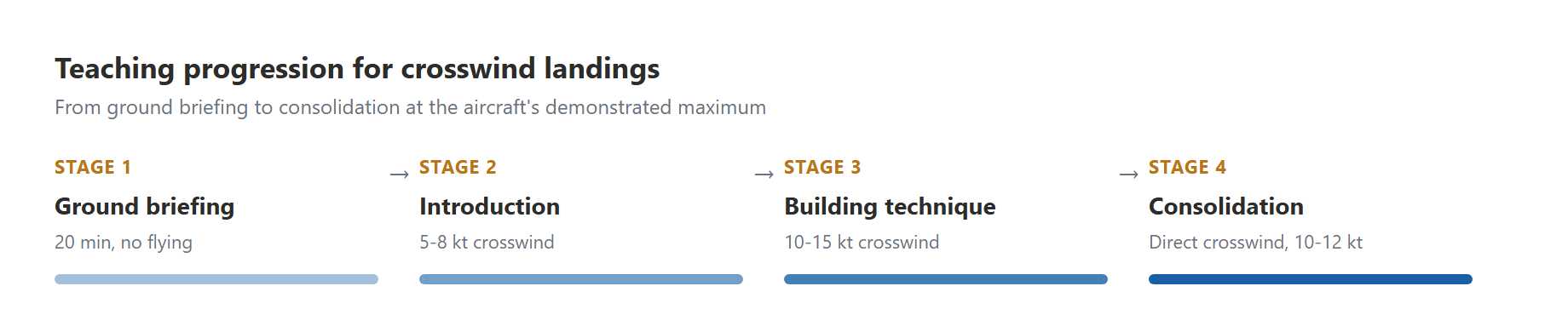
Stage 1: Establishing the mental model before the first crosswind circuit
The most common instruction approach is to take the student to a circuit session with crosswind conditions and teach the technique by demonstration and repetition. This works eventually but is inefficient because the student is simultaneously managing circuit workload, ATC, and an unfamiliar technique under novel conditions.
A more effective approach: before the first crosswind circuit session, conduct a 20-minute ground briefing that establishes the mental model completely. Cover:
- Why the aircraft drifts in a crosswind: the distinction between heading and track, and the forces at play
- The two main crosswind technique options: wing-low (crabbing removed by sideslip on final, into-wind aileron maintained), and crab-only (maintained to touchdown, then removed at the moment of touchdown)
- Which technique the school uses and why: most light aircraft training in Kenya uses the wing-low technique because it provides the most reliable alignment at touchdown on variable surfaces
- What the pilot should be feeling at each phase: the slight skid sensation in the sideslip, the pressure required to hold the into-wind aileron, the tendency to yaw toward the upwind side if rudder input is released
- The specific visual cues for alignment on final: what the centreline should look like when the aircraft is correctly crabbed or sideslipped versus when it is tracking off the centreline
Students who arrive at the first crosswind circuit with this mental model established acquire the technique significantly faster than those who receive their first crosswind instruction by demonstration with commentary in the cockpit.
Stage 2: Introduction in low crosswind conditions
The first crosswind practice session should not be in a challenging crosswind. A 5–8 knot component is enough to require technique without creating urgency. The goal in this session is to give the student feel: the actual physical sensation of maintaining a sideslip, holding into-wind aileron, and feeling the aircraft touch down aligned with the runway.
Your job in this session is to talk less and allow the student to process more. A common instructor error in crosswind teaching is narrating every phase of the approach continuously, which overloads the student's cognitive processing and prevents them from developing their own sensory awareness. Use targeted prompts at the key decision points instead:
- On final, as the crosswind becomes apparent: "How does the track look? What input does the aircraft need?"
- Approaching the flare: "Into-wind aileron is in, do you have the centreline?"
- After each landing: one specific observation, not a full commentary
Stage 3: Building technique in increasing crosswind conditions
Once the student can demonstrate consistent technique in light crosswind conditions (aligned touchdown, into-wind wing held, directional control through the rollout), progress to a session specifically chosen for 10–15 knot crosswind conditions. This is the range where technique that was mechanically adequate in light winds either holds up or fails.
The teaching focus in this stage is refinement and understanding of why the technique is working or not. Ask the student to narrate their experience: "What did you feel on that approach? What was the aircraft doing before the flare?" Students who can articulate their technique are developing the kind of self-monitoring that transfers to novel conditions, including the first crosswind landing they do solo, or the first landing at a bush strip with an unfamiliar surface.
The crosswind-on-murram considerations become relevant here as a teaching discussion. The student who understands that murram surface requires earlier and more definitive alignment, with into-wind aileron held more firmly through the rollout, is better prepared for their eventual bush strip operations than one who has only ever landed on tarmac.
Stage 4: Consolidation and the direct crosswind
Consolidation means the student can manage crosswind conditions approaching the aircraft's demonstrated maximum with appropriate technique, not just in sessions specifically planned for crosswind practice, but in routine circuits where the crosswind is one of several environmental factors to manage.
The specific test of consolidation is the direct crosswind (90° to the runway) in the aircraft's demonstrated range. At Wilson, this means a runway 07 landing with a direct south or north wind of 10–12 knots. This is relatively common in the afternoon thermal period. A consolidated student manages it as a technique application rather than a crisis response.
For students who will progress to cross-country navigation and eventual operation from bush strips, add a session specifically focusing on crosswind landings on the grass parallel at Wilson. The grass surface, with its lower rolling resistance compared to tarmac, changes the rollout control inputs required. This is also the context in which into-wind aileron discipline during the rollout becomes most visible in its effect: the aircraft tracks significantly better with deliberate aileron input on grass than without.
How AngaBrief supports crosswind teaching progression
The instructor review queue shows each student's pre-flight assessments including their self-assessed Environment ratings for weather conditions. A student who consistently underreports crosswind strength in their PAVE Environment section (either from inaccurate assessment or from minimising to make the assessment look better), is providing the instructor with information about their weather awareness development.
Following the structured debrief model, the crosswind teaching progression connects pre-flight assessment quality to in-flight performance. A student who accurately assessed a 12-knot crosswind, documented their technique plan, and then executed a consistent crosswind landing demonstrates integrated competence, which is what you are building toward from the first crosswind circuit briefing.