
Ask a Kenyan student pilot to recite the MAYDAY call and most can do it fine, sitting calmly in a classroom.
Ask the same student, mid-lesson, with an instructor simulating an emergency, and the fluency often disappears. The words that felt automatic on paper get slow and jumbled the first time they are needed for real, and that gap between knowing the words and using them is exactly what this article exists to close.
The Short Version
- MAYDAY signals distress, a condition of serious or imminent danger requiring immediate assistance, and it takes absolute priority over every other transmission on the frequency.
- PAN-PAN signals urgency, a genuine safety concern that does not yet require immediate assistance, and it outranks routine traffic but not a MAYDAY.
- Both are said three times at the start of the call under ICAO phraseology: MAYDAY MAYDAY MAYDAY, or PAN-PAN PAN-PAN PAN-PAN.
- The ICAO distress message format has a fixed order: who you are calling, who you are and what you are flying, the nature of the problem, your intentions, then your position, level, and heading.
- Kenya's Rules of the Air implement the same ICAO framework domestically through KCAA, so the call you practise here is the call Nairobi's controllers are trained to expect.
- The single biggest failure mode is not saying the wrong words. It is hesitating to key the microphone at all.
Distress and urgency are not the same emergency
ICAO phraseology defines these two conditions precisely, and the distinction matters because it decides which word comes out of your mouth first. Distress means you are threatened by serious or imminent danger and need immediate assistance, full stop.
Urgency means something is genuinely wrong with the safety of your flight, or a person aboard, but it has not yet become a threat requiring immediate help. An engine running rough but still producing usable power is closer to urgency.
An engine that has actually failed over unlandable terrain is distress. The words are not interchangeable, and picking the weaker one out of politeness or uncertainty under-calls the seriousness of your situation to everyone listening.
Why MAYDAY clears the frequency
Under ICAO Annex 10, distress messages carry absolute priority over all other radio traffic. The moment a MAYDAY is transmitted, every other station on that frequency is expected to stop talking and stay off the air unless they are helping coordinate the response.
That is the entire point of saying it three times at full volume and full clarity: MAYDAY MAYDAY MAYDAY. It is not dramatic phrasing for its own sake, it is a deliberate signal designed to cut through routine chatter and be unmistakable even on a noisy or partially readable frequency.
PAN-PAN works the same mechanism one level down. It gives you priority over ordinary traffic without demanding the frequency go silent, which matches its purpose: a real problem that still allows for orderly handling rather than an all-hands emergency response.
The message format, in the order that actually helps you
The format below comes from the ICAO Manual of Radiotelephony and is echoed in national guidance including the FAA's Aeronautical Information Manual, chapter 6. It is built to give the person on the other end exactly what they need, in the order they need it, even if you never get past the first two lines.
Notice what is first and what is last. Who you are and what is wrong come before your exact position, because a controller who knows an aircraft is in distress can start acting, coordinating, and clearing the frequency immediately, even with incomplete information.
Position, level, and heading are valuable and you should give them, but the format is deliberately ordered so a rushed or interrupted call still delivers the parts that matter most first.
What this looks like over Nairobi's airspace
Kenya's Rules of the Air, set out in Legal Notice 124 of 2018, implement the ICAO Annex 2 framework domestically through KCAA, and the same Annex 10 distress and urgency conventions apply here as anywhere else in the ICAO system. A controller working Nairobi's Flight Information Region has trained on the identical format you are learning in this article.
That consistency is deliberate and it is the whole reason standard phraseology exists worldwide. Whether you are talking to Wilson Tower, Nairobi Approach, or an uncontrolled frequency over the Rift Valley, the words MAYDAY and PAN-PAN mean exactly the same thing and trigger exactly the same priority handling.
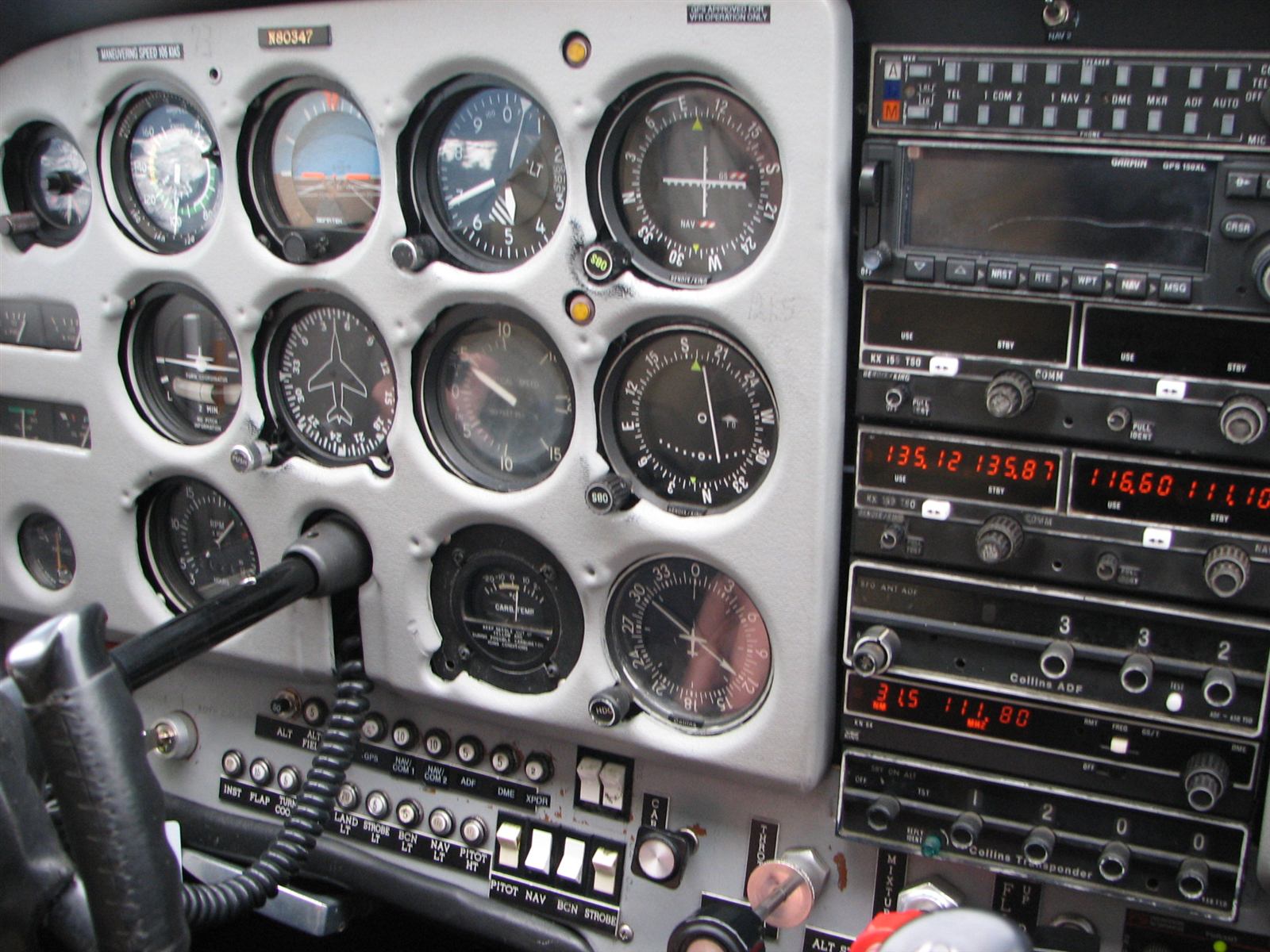
121.5 MHz is the internationally designated emergency frequency, and ATS units and many other stations maintain a listening watch on it under ICAO Annex 10. If you are outside range of your working frequency or unsure who else might hear you, 121.5 is the fallback.
A MAYDAY also connects directly to the search and rescue system this site has covered before: KCAA coordinates a genuine multi-agency response once distress is declared, and a filed flight plan gives that response a starting point your radio call reinforces rather than replaces.
The transponder codes that back up the call
If your aircraft is transponder-equipped, ICAO's standard emergency codes give controllers a second, silent way to know something is wrong even if your transmission is not readable. Squawk 7700 signals a general emergency, 7600 signals radio failure, and 7500 signals unlawful interference.
These codes are part of the same worldwide ICAO framework Kenya operates within, and using the right one the moment you declare, or the moment your radio fails and you cannot declare verbally, gives Nairobi's radar service a second confirmation independent of voice.
The radio call is not the end of the paperwork
Declaring an emergency over the air is the immediate, in-flight step. It is not the last one. KCAA runs a Mandatory Occurrence Reporting System, set out in advisory circulars including CAA-AC-GEN030 and CAA-AC-SMS004A, that requires pilots, operators, and air traffic controllers to formally report accidents and serious incidents after the fact.
Serious occurrences generally require notification within a short, defined window, commonly cited as within 24 hours. A voluntary reporting channel also exists for events that fall short of that threshold but are still worth the regulator knowing about.
Treat the follow-up report the same way this site treats the audit log on every AngaBrief risk assessment: not paperwork for its own sake, but the record that lets KCAA see patterns across the whole training system rather than one isolated flight at a time.
Why the hesitation is the real danger, not the wording
Here is the opinion part. Instructors spend real time drilling the exact wording of a MAYDAY call, and that is useful, but it is not where students actually fail under pressure.
The failure that shows up in practice is delay: a pilot working the problem silently for thirty or sixty seconds before keying the microphone, because they are not yet sure the situation is "bad enough" to justify the word.
That hesitation is backwards. A MAYDAY that turns out to be less serious than it first sounded costs a controller a few minutes of stood-up readiness.
A MAYDAY that should have been made thirty seconds earlier costs altitude, options, and sometimes the outcome. If you are asking yourself whether it is serious enough to declare, that uncertainty is itself the answer: say it, and let ATC help you sort out the details on the way down.
What pilots say once it has actually happened to them
Pilot forum threads about real emergency calls follow a consistent pattern once you read past the theory posts. Pilots who have actually made a MAYDAY call rarely talk about getting the wording perfect.
What they describe, almost without exception, is how much calmer the situation felt the moment they finally kissed goodbye to hesitation and made the call, because from that point on they were not managing the emergency alone anymore.
The recurring regret in those threads is never "I wish I had used different words." It is "I wish I had called it thirty seconds sooner."
Building the habit before you need it
This is not a call you want to be composing for the first time under real stress. Say it out loud during training, not just in a written exam.
Ask your instructor to run unannounced radio-emergency drills as part of normal circuit work, not just as a single briefed lesson early in the syllabus. Practise the five-part structure until the order is automatic, because automatic is exactly the state you need it in in the one flight where it actually matters.
Frequently asked questions
What if I am not sure whether my situation is distress or urgency?
Use your judgement in the moment and do not agonise over the choice. PAN-PAN can be upgraded to MAYDAY the instant things worsen, and controllers would rather you call early and adjust than stay silent while you decide.
Do I need to say MAYDAY three times every time, or is once enough?
Say it three times at the start of the initial call. The repetition is deliberate: it helps the message cut through interference or a partially missed transmission and removes any doubt about what word was just said.
What if nobody answers my MAYDAY call?
Keep flying the aircraft first. Repeat the call on your working frequency, then try 121.5 MHz, the internationally monitored emergency frequency, and squawk 7700 if you are transponder-equipped so radar can flag your position even without voice contact.
Can I get in trouble for declaring a MAYDAY that turns out not to be serious?
No reasonable system penalises a pilot for declaring in good faith based on the information available at the time. The far more common and far more costly mistake is under-declaring or not declaring at all.
Do I still need to file a report after making a MAYDAY or PAN-PAN call?
Yes, if the flight meets the threshold for an accident or serious incident. KCAA's Mandatory Occurrence Reporting System requires that follow-up, separate from and after the in-flight radio call itself.
Key Takeaways
- MAYDAY means distress and takes absolute priority. PAN-PAN means urgency and outranks routine traffic but not a MAYDAY.
- The ICAO message format runs: who you are calling, your callsign and type, the nature of the problem, your intentions, then position, level, and heading.
- Kenya's Rules of the Air implement the same ICAO Annex 10 framework, so the call you practise is the exact call Nairobi's controllers expect to hear.
- 121.5 MHz and squawk 7700 back up a voice call when your primary frequency or transmission is not getting through.
- The real risk is hesitation, not wording. Call early, and let ATC help you manage the rest.